Streets are an important part of our public realm. By balancing the needs of pedestrians, cyclists and motorists, a human-oriented approach in street design can provide great opportunities for placemaking in our communities.

Achieving slower speeds on urban streets, where vulnerable road users and vehicles mix, is integral to this goal. There’s overwhelming evidence that lower speeds result in fewer collisions and a reduced severity of injuries as well as improvements in air quality and improved noise levels. Balancing the needs of road users is also good for people’s mental and physical health offering the opportunity for higher levels of social connectivity and interaction.

It’s well documented that PJA are at the forefront of promoting lower speed limits on urban streets and creating spaces designed with all road users in mind. Our chairman Phil Jones led the historic Welsh 20mph speed limit change, and PJA has been instrumental in the designation of UK’s first town-wide 20mph speed limit in the English town of Faversham.

The demand for our expertise on liveable streets continues with speaking tours here and in Hong Kong, and numerous virtual conferences and webinars with particular interest in street design in the post-Covid world, area-wide reduced speed limits and active travel.

Phil Jones recently joined PJA’s transport and placemaking consultant Justin Yim at one such event, jointly organised by the Community for Road Safety and CUHK School of Architecture in Hong Kong, as part of the UN Global Road Safety Week. The virtual conference aimed to highlight the benefits of reduced speed limits on roads, modern street design concepts and the associated public health benefits. With around 100 deaths on roads in Hong Kong each year the appetite to put people first in street design is increasing. The recognition that lower speeds feed into the opportunity to design spaces more freely is gaining momentum and the advantages of no longer needing over complicated railings and street signs being appreciated.

Justin, who’s based in our London office, was born and raised in Hong Kong and is an active advocate for the concept of liveable streets in Hong Kong.

He says: “Despite a very high public transport mode share in Hong Kong, our surface streets are still designed with a car-oriented mindset. Through a better balance between the ‘movement’ and ‘place’ function on Hong Kong’s streets, we can create more liveable places in our neighbourhoods which everybody can enjoy. A low speed, low traffic street environment is the key to better social cohesion.”

Despite the evidence that supports the introduction of lower speed limits in urban areas in Hong Kong there are still some concerns with road users over how it could affect journey times and traffic congestion. In early 2020, Justin founded an organisation named Street Reset, with the aim of proliferating the idea of human-oriented street design in Hong Kong.

Justin says: “Street Reset is a social media-based collective dedicated to disseminating good practices in human-oriented street design and sustainable transport. Using social media, we hope to raise the awareness amongst Hong Kong’s public about the potential to transform our streets, so that people walking and cycling are treated more fairly.”

With some work still to do in persuading the road users of Hong Kong of the benefits of lowering the speed limit and introducing more people focused spaces, Street Reset hopes to be the beginning of a quiet revolution to spread the positive message of human approached street design.

PJA is made up of transport planners, engineers and place makers who work together to achieve a robust, evidence-led approach to development.

For more information please contact: [email protected]

Our wonderful team are our greatest asset. Not only experts in transport, engineering and placemaking but also committed to delivering better places for people through high-level-service client experiences.

We’re very proud to continue to celebrate the faces behind the fast-growing international consultancy that we are today in our feature ‘PJA People’.

Next up in our series is Transport Planning Associate Eliot King, based in our Bristol office:


Tell us what you do at PJA

I’m a transport planner based in PJA’s Bristol office. Much of my time is spent working on development planning applications for a real mix of clients and developments from renewable energy schemes to large mixed use developments containing residential and commercial uses.


What’s your career path so far?

I studied geography at Leicester University and was more drawn to the human, social science side than the physical side. In my final year I started looking around for job opportunities in the planning field. My first role was based in Swindon during which I undertook a part-time masters course in Transport Planning at UWE in Bristol, graduating in 2012. I moved to Hydrock in Bristol in 2013 and joined PJA in 2019.


What do you enjoy when you’re not working?

Anything outdoors generally – walking, cycling, camping. With a young family now though a lot more time is spent at the local parks or knocking our garden into shape which is a bit of a long term project.


Are you a dog or cat person?

I don’t have either, but I would probably say cat if I had to choose.


What are you currently reading or listening to?

I’ve just finished David Jason’s autobiography.


Claim to fame?

I was fortunate to go to St James’ Palace to receive my Gold Duke of Edinburgh’s Award. I had a conversation with the Duke about the Norfolk Broads where I’d done some conservation work as part of my award.


Eliot King, Associate

Eliot has over 10 years’ transport development planning experience comprising the successful delivery of detailed transport technical reports in support of site promotion, planning applications and supporting travel plans through planning and into implementation and monitoring. Eliot has experience working for both private and public sector clients and includes undertaking research projects analysing the profile of development trips, assessing town centre car parking provision and schemes identifying opportunities for public realm improvements.


To find out more about our services here

Our wonderful team are our greatest asset. Not only experts in transport, engineering and placemaking but also committed to delivering better places for people through high-level-service client experiences.

We’re very proud to continue to celebrate the faces behind the fast-growing international consultancy that we are today in our monthly feature ‘PJA People’.

Next up in our series is Senior Civil Engineer in our Water Resources team, Paul Bacchus, based in our Reading office:


Tell us what you do at PJA

I’m a Senior Civil Engineer working for the Water Resources team. As a team we’re principally concerned with anything to do with the water environment. Personally, my day to day work is usually spent working on Flood Risk Assessments and Drainage Strategies, carrying out Surface Water Drainage/SuDS design, Flood Risk mitigation, etc.


What’s your career path so far?

Went to University at Plymouth and obtained my MEng Degree. I then got a Graduate Role at CH2M before progressing as a Civil Engineer at Jacobs. Finally made the move to join PJA and haven’t looked back.


What do you enjoy when you’re not working?

The usual – music, tv, games, films, sports, art, reading. Recently taken up gardening which has been surprisingly enjoyable and therapeutic.


Are you a dog or cat person?

Allergic to both, but I like big dogs and ragdoll cats.


What are you currently reading or listening to?

The English and their History by Robert Tombs (trying to address some historical blind spots).


Claim to fame?

I once had dinner at Buckingham Palace for an ICE event (I was a +1 before you’re all too impressed).


Paul Baccus, Senior Engineer

Paul is a senior civil engineer with over 5 years’ experience working in flood risk and surface water drainage design.

Paul has experience working on flood risk analysis, flood modelling and the creation of sustainable and traditional surface water drainage solutions for a variety of clients in both the private sector and local government.


To find out more about our services here

Read more in our PJA People series here

Ahead of the Olympic Games, Jack Gray, Senior Transport Consultant in our Cambridge office, shares his experiences of running at an international level, and explains how he uses his mental and physical training to deliver for PJA.

“Despite my (relatively) youthful looks and abundance of (somewhat greying) hair, I have been running competitively for 15 years.

As a long-distance runner, I favour distances from 5km to half-marathon and cross country. I have earned numerous England caps on the road, track and over cross country; however, my proudest achievement was representing Great Britain at the European 10,000m Championships in London, where we won team silver.

As a sport that is often defined for its attrition and suffering, people often ask me why I run?

It’s a simple, yet stimulating, question that is difficult to answer with a punchy response.

I primarily run because I love the thrill of competitive sport, and the sense of camaraderie and sportsmanship that the running community is blessed with. Yet running competitively also breeds behaviours and routines that I apply, and rely on, in professional life.

As a transport planner and business case practitioner, my work requires me to strategise, programme, holistically analyse data and broader socioeconomic trends, innovate and ultimately deliver projects to time and budget.

But how does this relate to competitive running?

This summer we will witness finely tuned athletes step onto the hallowed Olympic stage. Here, they will have minutes, or even seconds, to execute four years of mental and physical training that has been meticulously structured and adapted to enable them to ‘peak’ for their moment in the spotlight.

Competitive sport thus demands us to programme and structure our training, to innovate to find those marginal gains, and, after all that, it requires us to be composed enough to deliver our end product in pressurised situations.

Having the time to train flexibly around work not only releases stress and improves my mood and confidence, but it also builds qualities and behaviours, such as time management and reflexivity, that we hold at the core of our ethos at PJA

To run is to be free, and from free minds innovation is born.”


Jack Gray, BSc (Hons) MRes

Jack is a Senior Transport Planner and an accredited Better Business Cases Practitioner based in our Cambridge office.

He has a wealth of experience advising public and private sector clients across a wide range of transport planning and traffic engineering projects.

Jack’s technical experience ranges from initial site feasibility assessments through to the delivery of business cases for major transport schemes.


Find out more on our transport services, including transport planning and business case development, here

Find out more

For more information please contact

From interrupting a meeting, to insisting to go out right now or just displaying a complete disregard for personal space, our pets love getting involved with our working week.

From guineas with glasses to dogs with ties, meet our furry friends:

To find out more about us and our services here

Our wonderful team of nearly 100 people in Australia and the UK are our greatest asset. Not only experts in transport, engineering and placemaking but also committed to delivering better places for people through high-level-service client experiences.

To show off our team we’re very proud to launch our new quickfire ‘PJA People’ series, to celebrate the faces behind the fast-growing international consultancy that we are today.

But PJA People doesn’t just have a professional focus, our 5-minute read tells you what you really want to know: hobbies and claims to fame – and asks the age old, socially unacceptable question: Are you a cat or dog person?

First up is Senior Consultant, Lianne Brook, based in our Birmingham office:


Tell us what you do at PJA
I am a Transport Planner, predominantly working within the development sector. I’ve recently got more involved with cycle infrastructure design and enjoy building active travel into development schemes.


What’s your career path so far?
I graduated from Sheffield Hallam University in 2013 with a geography degree and took my graduate job in London before moving up to Birmingham in 2017.


What do you enjoy when you’re not working?
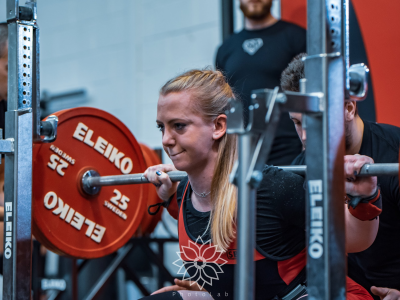
I am a competitive powerlifter and spend most of my spare time in the gym! I can squat 147.5 kg (over two times my bodyweight), bench 80kg and deadlift 175kg.


Are you a dog or cat person?
Dog! We recently picked up Haru, our Miniature Schnauzer. She certainly keeps us on our toes.


What are you currently reading or listening to?
Currently reading a puppy training guide book, although not sure if it’s helping much….


Claim to fame?
I met the England cricket team in Australia after the ashes.


Lianne Brook, Senior Consultant

Lianne is a Transport Planner with over 7 years’ experience in a range of technical work from both the public and the private sector. Lianne has developed a key focus in strategic development and built a specialism in assisting clients with land promotion by undertaking feasibility studies and delivering access strategies for strategic sites.

Get in touch with Lianne: [email protected]


To find out more about our transport planning services here

Follow us on LinkedIn or Twitter


Saudi Arabia lies at the crossroads of ancient civilisations, in spectacular landscapes, with a wealth of biodiversity and history. Areas within the country have been designated as UNESCO world heritage sites and much of the region has hosted settlements through thousands of years of civilisation.

Planning and development on such a large scale requires careful consideration of the client’s objectives to provide sustainable development within the natural and cultural landscape that preserves its identity, heritage, and natural landscapes.

PJA has been working on developing a water resources concept design as part of a Vision 2030 initiative that seeks to curate and foster tourism and leisure within the country. The nature of the work provides unique challenges, notably: managing water supply in a desert, understanding and updating existing water systems and providing interconnected up to date solutions that meets the needs of a rapidly developing region.

PJA’s scope developing conceptual water resource designs incorporates aspects of potable water design, wastewater design, water treatment and irrigation to provide a holistic approach to managing the built water environment. Working in combination with other consultants as part of a team, the PJA water resources experts continue to demonstrate their fast pace adaptability whilst exploiting opportunities to utilise their expertise along the way.

We’re delighted to welcome Benjamin Mentha as a Senior Associate at our Melbourne office.

He will lead the transport team and support director Sam Williams in advising public and private sector clients within Melbourne, Geelong and regional Victoria markets.

Ben has 12 years’ experience working on urban development projects, including major subdivisions, residential, mixed-use and commercial buildings and retail centres.

He also has extensive experience providing strategic advice to public and private sector clients on rezonings, Precinct Structure Plans and Development Contribution Plans; and has provided expert evidence on a range of planning appeals and amendments, Planning Scheme Amendments and compulsory land acquisition matters.

He is looking forward to assisting clients with their transport engineering, planning and design projects whilst drawing upon PJA’s placemaking and active travel expertise.

Ben said: “I’m excited to be joining PJA and look forward to expanding PJA’s excellent reputation for integrated transport planning, active travel and placemaking into the Victorian market.

“Development planning is at the heart of PJA’s business and the ability to combine my local knowledge and expertise with the strength and breadth of our broader UK team will ensure that we are able to provide the best solutions for our clients.

“PJA’s team are passionate about creating better places through good design and are recognised for their quality and leadership, so it was a team that I really wanted to join.”

Sam Williams, Director at PJA, added: “We opened our Melbourne office with a clear mission to offer our clients a high level of service and integrated approach to all projects.

“Benjamin brings a clear passion, technical excellence and reputation to the team and we are excited for him to develop our service offerings further.”

Ben can be contacted at [email protected]

As a conscientious company we constantly seek ways to ensure our work benefits the environment. We have therefore committed to being carbon neutral by 2024.

As part of the Carbon Neutral Programme we monitor our paper usage, recycling, electricity usage, staff mileage and commuter business mileage on a monthly basis and develop annual reduction targets.

Our Board all run electric or hybrid vehicles and we are mid way through a programme of changing all company pool cars to hybrid or electric vehicles. We are also moving towards even greater sustainability by ensuring our hire car suppliers only provide us with hybrid and electric vehicles.

All our employees benefit from a Cycle to Work scheme, enabling them to purchase a bike and accessories for travel to their office. We conduct travel surveys annually to monitor commuting trends with the aim of encouraging more environmentally friendly methods of travel.

We are committed to our Corporate Social Responsibility Programme for Green, Sustainable and Ethical Procurement, and are now working on ensuring that our transport planning, engineering and placemaking advice is in line with carbon best practice.

For more information, contact [email protected]

We’ve long known about the benefits of exercise on both our physical and mental wellbeing and, conversely, the damage that sedentary lifestyles cause. However, according to the Australian Institute of Health and Welfare, 59% of women and 50% of men in Australia are not getting the recommended levels of physical activity.

For most people, the easiest way to achieve the recommended physical activity levels is to incorporate it into everyday life through walking or cycling for short journeys such as to the shops, school, work or the train station. Walking is already the main way most of us are physically active.

The Covid-19 pandemic highlighted the importance of exercise not only for our physical health but also our mental wellbeing. The mass shift to home working for many also had a huge impact on how we use and view our local streets with many more people walking and cycling, particularly in the first lockdown in Victoria when traffic levels dropped significantly. We also noticed reduced air and noise pollution with many people hearing bird song outside their windows for the first time. Indeed, the evidence for the benefits of reduced car use and more active travel are plentiful, from the obvious health and wellbeing benefits to cutting carbon emissions, air and noise pollution and congestion.

The implementation of pop-up cycle lanes has raised awareness that there are major hurdles to getting people to walk and cycle more with the lack of safe infrastructure being a key barrier particularly for women, children and the elderly, while the role active travel can play in improving health is becoming increasingly recognised, placing it front and centre of any strategy.

To address these challenges our specialists are playing a key part planning and designing active travel schemes within the UK. These developments aim to create low speed environments and, where we can’t, such as on key arterial routes, providing protected cycle infrastructure to enable more cycling and walking for short journeys. We are also increasingly working at neighbourhood level to create Low Traffic Neighbourhoods (LTN’s) where residential streets and local centres become safer from the adverse impacts of traffic and provide more welcoming spaces where the opportunities for social interaction improve and children can walk and cycle safely to school.

As we reflect on the events of the past 12 months for World Health Day the many benefits of incorporating walking and cycling into our lives are clear and a quiet revolution to incorporate this into our everyday routines has started. We now have an opportunity to continue to support this change with safer, friendlier streets with the aim to ‘build back better’.

PJA were the lead authors of LTN1/20, the new cycling infrastructure design guidance in the UK, which was published alongside ‘Gear Change’, and co-authored the guidance on Local Cycling and Walking Infrastructure Plans. Our engineers, transport planners and place makers work together to achieve a robust, evidence-led approach to development.

For more information, please contact [email protected]

Sign up for more news from PJA here