Our wonderful team are our greatest asset. Not only experts in transport, engineering and placemaking but also committed to delivering better places for people through high-level-service client experiences.

We’re very proud to continue to celebrate the faces behind the fast-growing international consultancy that we are today in our monthly feature ‘PJA People’.

Next up in our series is Senior Civil Engineer in our Water Resources team, Paul Bacchus, based in our Reading office:


Tell us what you do at PJA

I’m a Senior Civil Engineer working for the Water Resources team. As a team we’re principally concerned with anything to do with the water environment. Personally, my day to day work is usually spent working on Flood Risk Assessments and Drainage Strategies, carrying out Surface Water Drainage/SuDS design, Flood Risk mitigation, etc.


What’s your career path so far?

Went to University at Plymouth and obtained my MEng Degree. I then got a Graduate Role at CH2M before progressing as a Civil Engineer at Jacobs. Finally made the move to join PJA and haven’t looked back.


What do you enjoy when you’re not working?

The usual – music, tv, games, films, sports, art, reading. Recently taken up gardening which has been surprisingly enjoyable and therapeutic.


Are you a dog or cat person?

Allergic to both, but I like big dogs and ragdoll cats.


What are you currently reading or listening to?

The English and their History by Robert Tombs (trying to address some historical blind spots).


Claim to fame?

I once had dinner at Buckingham Palace for an ICE event (I was a +1 before you’re all too impressed).


Paul Baccus, Senior Engineer

Paul is a senior civil engineer with over 5 years’ experience working in flood risk and surface water drainage design.

Paul has experience working on flood risk analysis, flood modelling and the creation of sustainable and traditional surface water drainage solutions for a variety of clients in both the private sector and local government.


To find out more about our services here

Read more in our PJA People series here

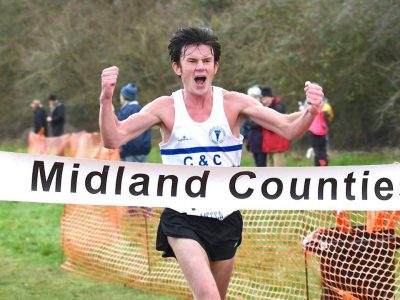
Ahead of the Olympic Games, Jack Gray, Senior Transport Consultant in our Cambridge office, shares his experiences of running at an international level, and explains how he uses his mental and physical training to deliver for PJA.

“Despite my (relatively) youthful looks and abundance of (somewhat greying) hair, I have been running competitively for 15 years.

As a long-distance runner, I favour distances from 5km to half-marathon and cross country. I have earned numerous England caps on the road, track and over cross country; however, my proudest achievement was representing Great Britain at the European 10,000m Championships in London, where we won team silver.

As a sport that is often defined for its attrition and suffering, people often ask me why I run?

It’s a simple, yet stimulating, question that is difficult to answer with a punchy response.

I primarily run because I love the thrill of competitive sport, and the sense of camaraderie and sportsmanship that the running community is blessed with. Yet running competitively also breeds behaviours and routines that I apply, and rely on, in professional life.

As a transport planner and business case practitioner, my work requires me to strategise, programme, holistically analyse data and broader socioeconomic trends, innovate and ultimately deliver projects to time and budget.

But how does this relate to competitive running?

This summer we will witness finely tuned athletes step onto the hallowed Olympic stage. Here, they will have minutes, or even seconds, to execute four years of mental and physical training that has been meticulously structured and adapted to enable them to ‘peak’ for their moment in the spotlight.

Competitive sport thus demands us to programme and structure our training, to innovate to find those marginal gains, and, after all that, it requires us to be composed enough to deliver our end product in pressurised situations.

Having the time to train flexibly around work not only releases stress and improves my mood and confidence, but it also builds qualities and behaviours, such as time management and reflexivity, that we hold at the core of our ethos at PJA

To run is to be free, and from free minds innovation is born.”


Jack Gray, BSc (Hons) MRes

Jack is a Senior Transport Planner and an accredited Better Business Cases Practitioner based in our Cambridge office.

He has a wealth of experience advising public and private sector clients across a wide range of transport planning and traffic engineering projects.

Jack’s technical experience ranges from initial site feasibility assessments through to the delivery of business cases for major transport schemes.


Find out more on our transport services, including transport planning and business case development, here

Find out more

For more information please contact

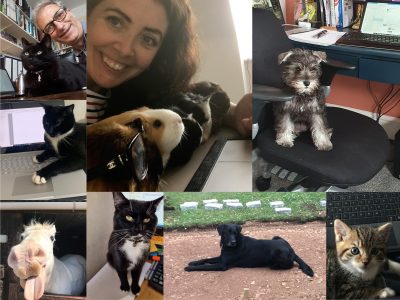
From interrupting a meeting, to insisting to go out right now or just displaying a complete disregard for personal space, our pets love getting involved with our working week.

From guineas with glasses to dogs with ties, meet our furry friends:

To find out more about us and our services here

Our wonderful team of nearly 100 people in Australia and the UK are our greatest asset. Not only experts in transport, engineering and placemaking but also committed to delivering better places for people through high-level-service client experiences.

To show off our team we’re very proud to launch our new quickfire ‘PJA People’ series, to celebrate the faces behind the fast-growing international consultancy that we are today.

But PJA People doesn’t just have a professional focus, our 5-minute read tells you what you really want to know: hobbies and claims to fame – and asks the age old, socially unacceptable question: Are you a cat or dog person?

First up is Senior Consultant, Lianne Brook, based in our Birmingham office:


Tell us what you do at PJA
I am a Transport Planner, predominantly working within the development sector. I’ve recently got more involved with cycle infrastructure design and enjoy building active travel into development schemes.


What’s your career path so far?
I graduated from Sheffield Hallam University in 2013 with a geography degree and took my graduate job in London before moving up to Birmingham in 2017.


What do you enjoy when you’re not working?
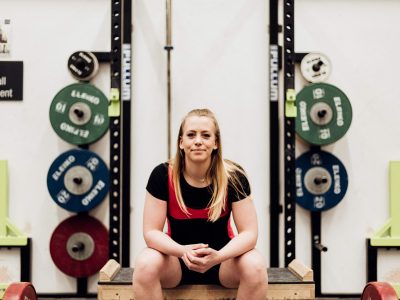
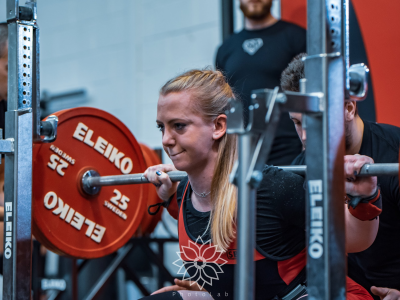
I am a competitive powerlifter and spend most of my spare time in the gym! I can squat 147.5 kg (over two times my bodyweight), bench 80kg and deadlift 175kg.


Are you a dog or cat person?
Dog! We recently picked up Haru, our Miniature Schnauzer. She certainly keeps us on our toes.


What are you currently reading or listening to?
Currently reading a puppy training guide book, although not sure if it’s helping much….


Claim to fame?
I met the England cricket team in Australia after the ashes.


Lianne Brook, Senior Consultant

Lianne is a Transport Planner with over 7 years’ experience in a range of technical work from both the public and the private sector. Lianne has developed a key focus in strategic development and built a specialism in assisting clients with land promotion by undertaking feasibility studies and delivering access strategies for strategic sites.

Get in touch with Lianne: [email protected]


To find out more about our transport planning services here

Follow us on LinkedIn or Twitter


Saudi Arabia lies at the crossroads of ancient civilisations, in spectacular landscapes, with a wealth of biodiversity and history. Areas within the country have been designated as UNESCO world heritage sites and much of the region has hosted settlements through thousands of years of civilisation.

Planning and development on such a large scale requires careful consideration of the client’s objectives to provide sustainable development within the natural and cultural landscape that preserves its identity, heritage, and natural landscapes.

PJA has been working on developing a water resources concept design as part of a Vision 2030 initiative that seeks to curate and foster tourism and leisure within the country. The nature of the work provides unique challenges, notably: managing water supply in a desert, understanding and updating existing water systems and providing interconnected up to date solutions that meets the needs of a rapidly developing region.

PJA’s scope developing conceptual water resource designs incorporates aspects of potable water design, wastewater design, water treatment and irrigation to provide a holistic approach to managing the built water environment. Working in combination with other consultants as part of a team, the PJA water resources experts continue to demonstrate their fast pace adaptability whilst exploiting opportunities to utilise their expertise along the way.

We’re delighted to welcome Benjamin Mentha as a Senior Associate at our Melbourne office.

He will lead the transport team and support director Sam Williams in advising public and private sector clients within Melbourne, Geelong and regional Victoria markets.

Ben has 12 years’ experience working on urban development projects, including major subdivisions, residential, mixed-use and commercial buildings and retail centres.

He also has extensive experience providing strategic advice to public and private sector clients on rezonings, Precinct Structure Plans and Development Contribution Plans; and has provided expert evidence on a range of planning appeals and amendments, Planning Scheme Amendments and compulsory land acquisition matters.

He is looking forward to assisting clients with their transport engineering, planning and design projects whilst drawing upon PJA’s placemaking and active travel expertise.

Ben said: “I’m excited to be joining PJA and look forward to expanding PJA’s excellent reputation for integrated transport planning, active travel and placemaking into the Victorian market.

“Development planning is at the heart of PJA’s business and the ability to combine my local knowledge and expertise with the strength and breadth of our broader UK team will ensure that we are able to provide the best solutions for our clients.

“PJA’s team are passionate about creating better places through good design and are recognised for their quality and leadership, so it was a team that I really wanted to join.”

Sam Williams, Director at PJA, added: “We opened our Melbourne office with a clear mission to offer our clients a high level of service and integrated approach to all projects.

“Benjamin brings a clear passion, technical excellence and reputation to the team and we are excited for him to develop our service offerings further.”

Ben can be contacted at [email protected]

As a conscientious company we constantly seek ways to ensure our work benefits the environment. We have therefore committed to being carbon neutral by 2024.

As part of the Carbon Neutral Programme we monitor our paper usage, recycling, electricity usage, staff mileage and commuter business mileage on a monthly basis and develop annual reduction targets.

Our Board all run electric or hybrid vehicles and we are mid way through a programme of changing all company pool cars to hybrid or electric vehicles. We are also moving towards even greater sustainability by ensuring our hire car suppliers only provide us with hybrid and electric vehicles.

All our employees benefit from a Cycle to Work scheme, enabling them to purchase a bike and accessories for travel to their office. We conduct travel surveys annually to monitor commuting trends with the aim of encouraging more environmentally friendly methods of travel.

We are committed to our Corporate Social Responsibility Programme for Green, Sustainable and Ethical Procurement, and are now working on ensuring that our transport planning, engineering and placemaking advice is in line with carbon best practice.

For more information, contact [email protected]

We’ve long known about the benefits of exercise on both our physical and mental wellbeing and, conversely, the damage that sedentary lifestyles cause. However, according to the Australian Institute of Health and Welfare, 59% of women and 50% of men in Australia are not getting the recommended levels of physical activity.

For most people, the easiest way to achieve the recommended physical activity levels is to incorporate it into everyday life through walking or cycling for short journeys such as to the shops, school, work or the train station. Walking is already the main way most of us are physically active.

The Covid-19 pandemic highlighted the importance of exercise not only for our physical health but also our mental wellbeing. The mass shift to home working for many also had a huge impact on how we use and view our local streets with many more people walking and cycling, particularly in the first lockdown in Victoria when traffic levels dropped significantly. We also noticed reduced air and noise pollution with many people hearing bird song outside their windows for the first time. Indeed, the evidence for the benefits of reduced car use and more active travel are plentiful, from the obvious health and wellbeing benefits to cutting carbon emissions, air and noise pollution and congestion.

The implementation of pop-up cycle lanes has raised awareness that there are major hurdles to getting people to walk and cycle more with the lack of safe infrastructure being a key barrier particularly for women, children and the elderly, while the role active travel can play in improving health is becoming increasingly recognised, placing it front and centre of any strategy.

To address these challenges our specialists are playing a key part planning and designing active travel schemes within the UK. These developments aim to create low speed environments and, where we can’t, such as on key arterial routes, providing protected cycle infrastructure to enable more cycling and walking for short journeys. We are also increasingly working at neighbourhood level to create Low Traffic Neighbourhoods (LTN’s) where residential streets and local centres become safer from the adverse impacts of traffic and provide more welcoming spaces where the opportunities for social interaction improve and children can walk and cycle safely to school.

As we reflect on the events of the past 12 months for World Health Day the many benefits of incorporating walking and cycling into our lives are clear and a quiet revolution to incorporate this into our everyday routines has started. We now have an opportunity to continue to support this change with safer, friendlier streets with the aim to ‘build back better’.

PJA were the lead authors of LTN1/20, the new cycling infrastructure design guidance in the UK, which was published alongside ‘Gear Change’, and co-authored the guidance on Local Cycling and Walking Infrastructure Plans. Our engineers, transport planners and place makers work together to achieve a robust, evidence-led approach to development.

For more information, please contact [email protected]

Sign up for more news from PJA here

In today’s International Women’s Day finale we talk to Alison Caldwell, an Associate in our engineering team in our Birmingham office.

Alison shares her proudest career achievement: using her engineering skills to help the recovery effort in New York City, after it was hit by the horrific Hurricane Sandy in 2012.


What was your career path, how did you get to where you are today?

To be honest, being an engineer was not something that I set out to be.  As a child, I was interested in everything; pinning me down to a specific interest or getting me to focus on just one thing was never easy.  I enjoyed maths and sciences and I remember sitting in my GCSE geography class when we were learning about river forms and flooding, and how communities are protecting themselves and I thought to myself ‘that must be a cool job to have.’  After that it seemed pretty straight forward, I needed to find a way to combine maths and science with rivers and flooding and so I went off to university to study civil engineering, specifically focused on water.

Since university I have been really fortunate to have been given opportunities to work on exciting projects of all scales in the UK and worldwide, but more importantly I was fortunate to work with, and learn from, some very inspirational individuals in the engineering sector.  It has always been my goal to enjoy what I do, but more importantly, to try to ensure those around me enjoy what they do.


What do you think is your greatest achievement within your career to date?

In 2012, while I was working in New York City, Superstorm Sandy made land on the coast of New Jersey and New York leading to mass devastation from flooding.  It was a horrendous time to see the devastation caused, however out of that came a unique personal opportunity to support the recovery efforts through engineering.  I was very fortunate to be part of a team that worked hard to understand the vulnerabilities of coastal communities and to influence decision makers on the various means to enhance the resilience of these areas.  On a recent trip back to New York City I saw some of these resilience measures in place across the city and the surrounding boroughs and coastline and felt a genuine sense of achievement that I may have had some small part to play in protecting these communities.


What is the most important message you want to send out to young women thinking about their careers?

When I was told as a young girl that girls can’t do things, my automatic response was always ‘Why not?’ and to this day that is still my automatic response.  At 18, I had no idea what I wanted to do with my life but I decided that I wanted to do something that I enjoyed, something that challenged me, something that gave me opportunities to learn and ultimately something I could be proud of.  I feel that is exactly what engineering offers.  Over the last ten years, I can honestly say that however difficult things are in the moment, I can look back and say one of four things; ‘I enjoyed it,’ ‘it challenged me,’ ‘I learned something’ or ‘I’m proud of it.’

As you start your career, my advice is simple.  Every career path is different and specific to you.  Don’t try to fit the mould – there is no one else exactly like you.  Decide what your key drivers are and don’t compromise on these, define your own career to ensure it gives you everything you need.


For further information on our flood risk and water management services, please contact: [email protected]

On day 4 of our International Women’s Day celebrations, we talk to two members of our transport planning team: Associate Catriona Swanson in our Manchester office and Senior Consultant Jane Overton in our Birmingham office.

They share their career paths and achievements and urge more women to consider jobs in transport planning and active travel.


Catriona Swanson

What was your career path, how did you get to where you are today?

My undergraduate degree was in Geography and then I went on to do a Masters in Town Planning, specialising in regeneration. I joined Salford City Council’s planning and regeneration team in 2008 just before austerity kicked in and worked there for nearly 11 years. I was really lucky to work on a really wide range of projects from small public realm schemes through to commissioning masterplans and producing regeneration strategies.

After moving closer to my workplace in 2012 I started walking and cycling to work and developed an interest in active travel. I put myself forward to lead on walking and cycling schemes and gradually carved out a niche for myself, becoming the Council’s lead on walking and cycling. I managed to increase the quality and ambition quite dramatically over a short space of time, winning several awards. I also worked really hard to raise the level of political will and upskill the wider team.

In May 2019 I left Salford to join Arup where I established an active travel team in the North West and Yorkshire region, again helping to upskill colleagues and embed the principles of good design across different disciplines. I worked on a number of really interesting projects at Arup including proposals for major corridors and low traffic neighbourhoods.

At the start of February (2021) I joined PJA as an Associate. I’ve been a big fan of PJA since I commissioned them when I was at Salford City Council to produce a cycle network plan for the city. The quality of the work completely exceeded my expectations and I used the plan to underpin a lot of the really ambitious schemes I secured funding for. I’ve always thought of PJA as being one of (if not the) leading active travel consultancies so, when they opened a Manchester office, I jumped at the chance to join and help Chris Sibthorpe establish the office.


What do you think is your greatest achievement within your career to date?

I have been lucky enough to work on a lot of projects that I’ve been really proud of but nothing matches seeing your schemes actually built.

There are two schemes in Salford that I’m particularly proud of working on. Firstly, seeing the realisation of the regeneration strategy for Irlam Station including the refurbishment of the station house from a shell of a building used as a chicken coup to a beautiful café and community hub. Secondly, leading on the delivery of Salford’s traffic-free network which has so far won three awards including the National Transport Award for excellence in cycling and walking. The buzz of seeing the paths packed with people of all ages walking, running and cycling is second to none.


What is the most important message you want to send out to young women thinking about their careers?

That they should definitely consider a career in transport planning and particularly active travel. The profession is, unfortunately, still quite male dominated which inevitably means that the needs of women are not always considered. This is particularly the case in active travel where it is so important to understand issues around personal safety that affect women disproportionally.

It is really important that more women enter the profession so that we can address these issues and ensure we’re designing good places and transport that meets the needs of everyone.

As a woman working in a male-dominated field I generally feel treated as an equal and that my skills and experience are respected – and that’s definitely the case at PJA. However, I am frequently the only woman in meetings and have, at times in my career, felt that male colleagues were given preferential treatment and greater opportunities for career progression. However, I wouldn’t want this to put young women off joining the profession – there are great opportunities, and the work is incredibly interesting and rewarding.


[email protected]


Jane Overton

What was your career path, how did you get to where you are today?

When I was at school there wasn’t ever one subject I was particularly interested in more than others, so I found it really hard to pick GCSE and A Level choices. I decided to keep my options open and go for a range of subjects, which ultimately led me to studying for a Human Geography degree at Durham University.

In my search for graduate jobs, I initially applied for various roles in the retail sector, because this was the only work experience I had. After attending several job interviews, I realised that I wasn’t passionate enough about the job to make it a career. I then started looking for jobs that used Geographical Information Systems (GIS), as this was something I really enjoyed using and learning about throughout school/university.

This was then I came across transport planning. I’d never heard about the discipline of transport planning before, but in addition to the use of GIS, what drew me to the field was the broad skillset it encompasses and ability to have a positive impact on the lives of others. Five and a half years later, I’ve worked at two consultancy firms and wouldn’t look back on my decision to be a transport planner at all!


What do you think is your greatest achievement within your career to date?

I can’t pinpoint one thing, or project, that is my greatest achievement, instead I’d say it’s finding a career that I genuinely enjoy, where every day is different and knowing that the work that I do has the potential to make a tangible positive impact on people’s lives, the environment and wider society.


What is the most important message you want to send out to young women thinking about their careers?

Don’t worry about not knowing what career path you want to follow – there is something out there for everyone! If there is a particular skill you’re good at, or you have specific area of interest, do some research about what careers are available, and speak to others about your options. Work experience can be invaluable when you’re exploring different career paths, so I’d definitely recommend seeking this out whilst at school/college/university.

I think it’s also important to step out of your comfort zone when thinking about career choices – not only could this lead to a successful and enjoyable career, but also allow you to build resilience, gain new skills, broaden your perspective and boost your confidence!


[email protected]