In the race to cut carbon, the conversation often gravitates towards big moves: fleet electrification, flagship cycling schemes, low-carbon materials. These are important, but they’re not where most carbon is actually locked in.

For civil engineers, the most influential carbon decisions are often the smallest and least visible, made quietly at concept stage and treated as routine. Junction radii, kerb types, sub-base depths, parking ratios, earthworks profiles and drainage approaches may seem insignificant individually, but together they define a scheme’s carbon trajectory for decades.

This is why the difference between high and low-carbon design isn’t just about process – it’s about culture. Organisations that take a fundamentally different design approach, such as PJA, consistently deliver carbon-efficient, people-centred outcomes because of how they think, not just what they specify.

Small Decisions, Big Carbon Impacts

Civil engineering design is full of inherited defaults that rarely appear in carbon strategies but shape every project. These are not technological issues. They are matters of engineering judgement:

Over-specification

Over-specification is often hidden in geometry. Designers default to wider lanes, larger junction radii, excessive visibility and oversized roundabouts. Each choice increases surface area, pavement depth, lighting, and earthworks, yet many can be reduced without compromising safety when design speed and context are properly considered.

Similarly, pavement and sub-base thicknesses are frequently increased “just to be safe.” Small additions – millimetres at a time – quickly scale into significant volumes of aggregate, asphalt, transport movements and embodied carbon. Small reductions compound significantly across large schemes.

Questioning whether a junction needs to be signalised at all can avoid significant amounts of steel, ducting and long-term maintenance emissions.

Right-sizing infrastructure

High parking numbers lead to larger impermeable areas, more drainage systems , more excavation and long-term carbon-heavy car dependency.  When parking is right-sized to the context, carbon drops instantly.

Tightening junction radii by even one or two metres reduces asphalt, drainage extent, excavation and design speeds, with knock-on operational benefits. Challenging lane widths and designing to the context shrinks the overall footprint and reduces material use and lighting demand.

Early considerations

Drainage design often defaults to piped systems, carrying high embodied carbon in concrete and PVC. By contrast, implementing SuDS can reduce materials, excavation, and maintenance while improving biodiversity – but only if space is planned for them early.

Even earthworks are frequently left too late. Designing vertical alignments to follow the landform can eliminate large volumes of cut and fill, along with the need for retaining structures and material transport.  Minor alignment changes can be made at concept stage, but once geometry is fixed, the opportunity is lost.

Early engagement with manufacturers can also unlock lower-carbon materials and alternatives, avoiding decisions driven purely by habit.

Why Culture Matters More Than Process

The hidden carbon cost of “business as usual” isn’t caused by a lack of standards or tools – it’s caused by a lack of attention to the unobvious decisions that quietly shape a project’s footprint. Whilst processes and checklists can encourage early carbon thinking, they cannot replace a culture that empowers designers to challenge norms

By putting active travel at the centre of design, PJA have created a culture where:

  • Standards are interrogated, not blindly applied
  • Junctions start compact and grow only if justified
  • Land is allocated to people first, vehicles second
  • Carriageway space is treated as finite and expensive
  • Designers feel confident explaining why a smaller, simpler layout is better

True carbon leadership is not loud, it’s meticulous. And it’s found in the thousands of small decisions that only skilled civil engineers know how to make. This culture doesn’t just support low-carbon design – it makes it unavoidable.

Find out more about us here

Sign up for more news from PJA here
Transport systems and infrastructure are often considered to be gender-neutral: roads, railways, bus networks and pavements are designed to move people from A to B. 

But in reality, transport systems are not experienced equally. They reflect the priorities and assumptions of the societies that have built them, and historically, those priorities have not centred on women and girls. 

If we are serious about creating equitable, inclusive places that work for everyone, we must start by looking at transport through a gendered lens. This includes travel patterns, social or felt safety, and experience of place. 

The invisible patterns in women’s journeys

Traditional transport planning has largely been built around a linear commute: home to work and back again, typically during peak hours. This model reflects the movement patterns of a historically male breadwinner in a nuclear family – a single, predictable trip chain focused on paid employment out of the home.  

But women’s travel patterns are often more complex. 

Women are more likely to undertake “trip chaining”, combining multiple short journeys in one outing: dropping children at school, caring for relatives, stopping at shops, attending medical appointments, and travelling to work, more often part-time or shift work. These journeys are often off-peak, multi-stop and reliant on local services such as buses.  

Caring responsibilities also shape mode choice. Women are more likely to travel with children, shopping, or dependants, meaning that safety, accessibility and convenience are not abstract concepts, but daily practical concerns. They depend on frequent, reliable public transport, safe walking routes, and step-free access for prams or mobility aids. 

When transport networks are designed primarily around peak-hour commuter flows into city centres, they risk underserving these realities. 

Safety is not a “nice to have”

For many women and girls, safety is the defining factor in how and whether they travel, as well as which mode they choose. 

This is about lived experience, what is sometimes called “felt” or “social” safety, and goes beyond crime statistics: 

  • Poor lighting at bus stops 
  • Isolated walking routes 
  • Infrequent services that increase waiting times 
  • Overcrowded services 
  • Lack of visible staff presence 

Perceived safety can be just as powerful as actual risk. If a journey feels unsafe, it may impact timing, mode, or even be avoided entirely, potentially limiting access to employment, education, healthcare and socialisation. Research consistently shows that women are more likely than men to modify their travel behaviour due to safety concerns: avoiding certain routes, travelling only at particular times, paying more for taxis, or not travelling at all. 

When half the population must plan defensively simply to move around their communities, the system is not working equitably. 

How we put women and girls at the centre of our work

This is not simply a theoretical challenge; it is a practical one. If transport systems can inadvertently embed inequality, they can also actively address it. 

At PJA, we recognise that designing equitable transport systems requires deliberate action, and we are working to integrate this into every stage of our transport projects. We plan connected walking and cycling networks and recommend a network density that allows for different routes for different users and even different times of day, considering surrounding land uses. We design for safety and accessibility and consider elements beyond our “red line boundary” such as street lighting.  We work closely with communities to understand local issues in their streets and help them articulate their vision for the future.  

Acknowledging and actioning gender in transport and the built environment is increasingly recognised across the industry, with many great local examples of considering women and girls in planning and design of our cities and transport networks.  

Much of the focus of these initiatives has been on safety. In 2025, the government formally recognised Violence Against Women and Girls (VAWG) as a national emergency, prompting detailed investigations into safety on public transport. The organisation Women in Transport reported progress in 2025, with female leadership in the transport sector rising from 26% in 2023 to 36%, reflecting broader efforts to empower women within the industry and influence safety policies from leadership positions.  

Despite this progress, there is a lot more to do to achieve gender parity and work towards ensuring everyone feels safe. Calls continue for gender disaggregated data and better monitoring, alongside a more robust bus network and better pay for women in transport. The Transport for West Midlands (TfWM) Women’s Safety on Public Transport Report highlighted that improving safety requires more than enforcement, it involves culture, policy, and design of transport spaces.   

Embedding a gendered lens does not mean designing transport “for women” as a separate category. It means recognising diversity in lived experience and ensuring systems are flexible, inclusive and responsive. 

When we design for those whose needs have historically been overlooked, we improve outcomes for everyone: parents with buggies, older people, disabled passengers, shift workers, and young people travelling independently for the first time. 

From awareness to accountability

International Women’s Day is an opportunity not just to acknowledge inequality, but to ask what structural changes are required to address it. 

Transport shapes opportunity. It determines who can access jobs, who can study late, who can socialise safely, and who feels that public space belongs to them. 

Seeing transport through a gendered lens challenges us to move beyond neutrality and towards intentional equity. 

Because infrastructure is never just about movement – it is about freedom. 

Find out more about us here

Sign up for more news from PJA here
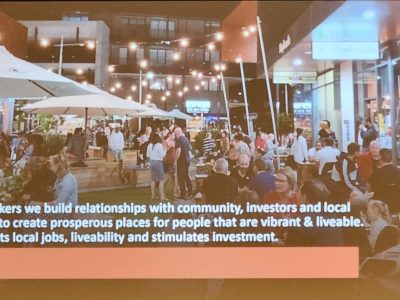
In the intricate web of urban planning and transport engineering, the concept of placemaking stands as a beacon of human-centric design amidst the bustling realm of traffic and movement.

Sonja Hayes, an Associate from our Perth office, delves into the evolving landscape of placemaking and its pivotal role in shaping vibrant, interconnected communities within the transport industry. 

At the heart of the debate lies the question: Is placemaking as a specialised field warranted, or should it be an inherent component of every design, seamlessly interwoven by engineers, planners, and architects?  

Drawing from her diverse professional journey spanning road safety in New Zealand to traffic engineering and now transport planning in Australia, Sonja illuminates the transformative power of prioritising people-centric design principles through her presentation to AITPM – Leadership in Traffic and Transport: 


Find out more about us here

Sign up for more news from PJA here
What makes good street design? Quite a lot as it happens, with benefits for people, health and quality of life being the top factors. We asked Rebecca Jones, who is about to celebrate her first anniversary as a Principal Consultant at our London office in the UK, to tell us more.

I have been working in street design for a number of years now, and along the way I have learned a few things about what makes a good street! For me, a key place to start is considering the whole street environment – not just kerb to kerb. Streets perform both a place and a movement function, and as designers we need to understand where each street sits on this spectrum, and also establish if this is something we can look to change. We need to ensure streets work for all users, but in particular we need to look to prioritise sustainable and active travel modes where possible.

The Healthy Streets concept introduced an approach to street design that considers the wider functions of a street beyond movement, and recognises the importance and potential to transform our streets in to assets for all to enjoy. From a design perspective, making a street healthier can be as simple as providing wider footways or improving lighting, to more major interventions like protected cycle facilities or filtering a street to through-traffic. This is key, as streets make up 80% of all open space in towns and cities, space that can be designed to benefit the whole community.

It’s easy to feel like some of our streets are made with only cars in mind. With someone being killed or seriously injured on UK roads every 22 minutes◊, and fear of road danger being the most common reason people don’t cycle, it is key that we look to make our streets safer for all. When I am looking at improving a street for walking and cycling, my first port of call is to see whether the speed and volume of traffic can be reduced. When we think about slowing traffic, we might initially think of more traditional traffic calming measures such as speed humps, but other measures such as greening, narrowing the road and using different materials can all signal to drivers to slow down and take care. Reducing through-traffic also has to potential to transform any street into a healthy street at a relatively low cost, as without the worry of passing cars walking and cycling is more attractive, children can play outside, parents relax, neighbours get to know each other better and a more cohesive and safe community for people to live and work in is created. In turn, people are more active and less isolated, and the benefits of increased physical exercise and social connectivity can lead to major health improvements.

I started cycling as an adult when I moved back to London after university and couldn’t afford the Tube. While I was nervous at first, I found that once I experienced the freedom that cycling brings, I didn’t want to go back! If we want to see modal shift though, we need to make our streets safer and inviting for all, to ensure that people are able to make a choice as to how they travel.

An example of changing an existing street to be more people-focussed is one of my projects, Windmill Drive in Lambeth. During the COVID-19 Pandemic, Lambeth Council trialled filtering this street that runs through the popular Clapham Common to through-traffic for several months. Following this successful trial, whereby the scheme was well-received by visitors and residents alike, I designed a permanent scheme for the street. The scheme aims to transform Windmill Drive in to a high quality urban realm environment that maintains its key movement function for pedestrians and cyclists whilst de-paving much of the street to provide enhanced planting and sustainable urban drainage systems. Additional features such as seating, cycle parking and insect hotels all help to transform this street into more of a ‘place’ for all to enjoy. The scheme is currently progressing so watch this space for updates!

Find out more about our placemaking services here


Rebecca Jones, Principal Consultant

Rebecca is a highway engineer and transport planner based in our London office in the UK. She has over ten years’ experience in the sustainable transport industry, and has worked within the public, private and not-for-profit sectors.

Rebecca advises on street design, transport planning and sustainable travel for mainly local authority clients. Her technical expertise includes concept and detailed design of cycling and walking infrastructure, as well as GIS mapping, network planning, data analysis and project management. She has extensive experience of community engagement and co-design, and has worked on projects both in London and across the UK.

Get in touch with Rebecca: [email protected]


https://www.brake.org.uk/get-involved/take-action/mybrake/knowledge-centre/uk-road-safety

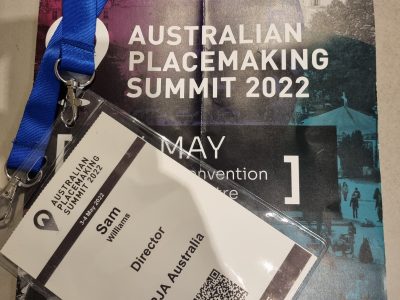
20 minute neighbourhoods, we are all placemakers and “Farnarklin” – All covered in Day 2 of the Australian Placemaking summit 2022.

Following a very insightful first day from multiple industry leaders I was excited to attend Day 2 of the placemaking summit 2022. Day 1 helped establish the fundamentals of placemaking and how it has a significant impact on everyone’s lives. Day 2 expanded on this and even highlighted that if done well it can extend life expectancy!

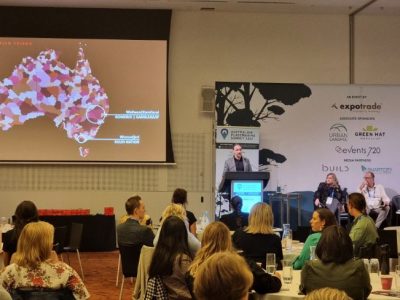
The day kicked off with a keynote from Lucinda Hartley (Neighbourlytics) exploring the world of big data to provide alternative ways to score places using hyper-local analytics for 20 minute neighbourhoods backed by global research and coverage. The case studies from cities around the world explored the interaction between social life, wellbeing of places and citizen-centric design.

This presentation was followed by Peter Smith (City of Port Phillip) on the opportunities and challenges of Fishermans Bend, a development close to my heart being in my local neighbourhood.

Fishermans Bend is Australia’s largest urban renewal project covering approximately 480 hectares in the heart of Melbourne. The development will create employment opportunities for up to 80,000 people and provide approximately 80,000 homes by 2050.

Peter highlighted the importance of the three critical success factors, software, hardware and orgware. The concept of ‘orgware’ was new to me but one that will not be forgotten, orgware helps to provide the framework of a development and resonated with me as it ensures the place has a soul. You can build the best buildings, install the best features but without the place having a soul it will struggle with the test of time.

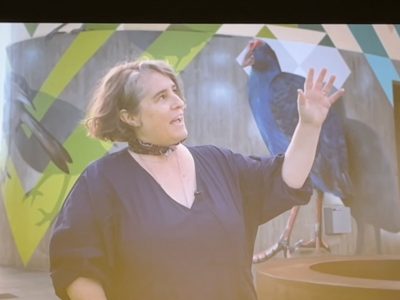
Frith Walker (Panuku Development) was unable to make the conference and pre-recorded a presentation, a masterclass of how to pre-record a presentation I must add! The passion Frith has for placemaking shone through into the room and had every attendee glued. Frith took us on a guided tour of a project across the ditch in Tāmaki Makaurau, a project that has been designed with a heart and encompasses one of the initial quotes:

“Hutia te rito o te harakeke
Kei whea to kōmako e kō?
Ki mai ki ahau
He aha te mea nui o te Ao?
Maku e kī atu,
he tāngata, he tāngata, he tāngata”

“If the heart of the harakeke was removed,
Where would the bellbird sing?
If I was asked what was the most important thing in the world
I would be compelled to reply,
It is people, it is people, it is people”

From an engineering perspective the development needed a pumping station, from a placemaking perspective the development embraced the requirement for a pumping station, seeing it as an opportunity to bring artwork into the community.

A panel discussion followed discussing placemaking and the property development, Sophie Pickett-Heaps (Stockland) stated they embrace placemaking and see it as a critical aspect in their role as developers. Afterall, they are not simply selling a product, they are first hand creating a community and lifestyle. Bec McHenry (To Good Use) provided a key take away comment; we should all call ourselves placemakers, not just Architects, Planners, Engineers etc.

This is a great way to break down the barriers and encourage collaboration, by each profession coming together with the one vision – to create a better place through great design. It just so happens this is the reason I joined PJA, to integrate all aspects of development!

Farnarkling?

I was then introduced to one of the most Australian words I have come across: ‘Farnarkling’ – The group activity whereby everyone sits around discussing the need to “do something” but nothing actually happens.

Bruce Mills (City of Parramatta) went on to explain how they have one of the largest local government place-making teams linking projects, initiatives and priorities across multiple business units.

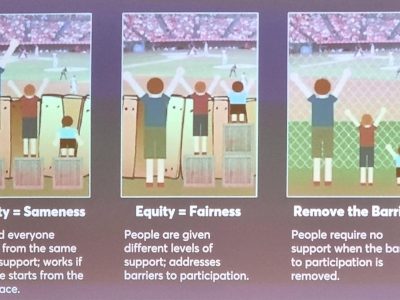
We have all seen the “Equality = Sameness and Equity = Fairness” image but the third “Remove the Barrier!” is rarely depicted, why can’t we just remove the barrier! Wouldn’t this create a world we can all celebrate? I believe the more conversations we have around inclusive design, collaborating between all professions and increased consultation with every stakeholder the outcomes can only ever be celebrated.

Are there other engineers at a placemaking summit you ask?

This time taking centre stage with a panel discussion: Placemaking and public lighting.

Highlighting the importance of lighting, not just on safety but the transition between space and creating places through light play. It was great to hear the passion from other engineering professionals to be included in initial designs and just how flexible lighting can be, not just fit for purpose but can be embraced. Why just design places for the day when dark occupies up to 50% of the time?

But…did I get questions answered?

So were my initial three questions answered on Placemaking?

• Is it implementing shared spaces and slowing vehicular traffic?
• Is it removing parking and encouraging active travel?
• Is it just another buzzword in the industry?

The answer is both yes and no to all three and that is ok.

Every presenter had a different definition of placemaking and that’s ok too, so long as we all have the ambition to create great places.

Afterall, we are all placemakers!


Got questions or fancy a conversation over a coffee? Get in contact as it would be great to keep the topic at the forefront of discussions.

For more information, please contact [email protected]

Find out more about us here


What is placemaking really? Which professions are involved? And why is a civil engineer here? I have been working in civil engineering for over a decade and in more recent years placemaking has moved to the forefront of design.

Through my engineering career I’ve worked on a wide variety of projects ranging from intersections and Water Sensitive Urban Design (WSUD) to commercial precincts and street upgrades, and placemaking was often seen as a topic no one could agree a fixed definition of. Is it implementing shared spaces and slowing vehicular traffic? Was it removing parking and encouraging active travel? Is it just another buzzword in the industry?

These are all questions answered during the Placemaking Summit 2022 in Melbourne.

Day 1 provided insights from industry leaders from around the world, topics including the economic benefits, human-centred planning, major projects and indigenous inclusions. Each presentation was built around placemaking but with a varying focus from economists, architects, landscape architects and transport consultants.

The overriding passion from every speaker and attendee that I met was to change the way in which we design places in order to focus on creating a sense of community and connection to the land – this was infectious.

Louise Ford from Hatch Roberts Day outlined the underlying benefits of adopting a place focused design from the outset which often realises stronger financial returns. Using the following seven elements to measure performance of a great place helps create a more fulfilling lifestyle:

  1. Equity
  2. Identity
  3. Greenery
  4. Urbanity
  5. Mobility
  6. Wellness
  7. Resilience


A panel discussion on Placemaking for Everyone explored the importance of engaging with indigenous culture and ways in which we can include the rich history from the longest civilization in the world. And how, if done right, can bring a true sense of belonging to the place. As a recent migrant to the Bunurong Boon Wurrung and Wurundjeri Woi Wurrung peoples of the Eastern Kulin Nation (The City of Melbourne) this topic was especially insightful and provided a number of research topic takeaways such as the International and Australian Indigenous Design Charter.

A number of talks explained the opportunities Covid-19 has presented us, a once in a lifetime event that has disrupted the industry. For example, pre-Covid removing a parking space was faced by heated public consultations, months of bureaucracy and scepticism. However, now retail venders are requesting parking to be replaced with parklets and approvals are taking less than 30 days!

Presentations covered how Covid has redirected focus and gained momentum in movement and place, that streets don’t have to be car centric thoroughfares but can be destinations in their own right. Where people can and want to sit, dwell and relax.

Daniel Bennett (Aurecon) and Will Fooks (Stantec) separately explored the importance of design thinking, data and real metrics to shape big projects and cities whilst recognising the dual function infrastructure can play. How seeing the opportunity to reduce road space, increase landscaping and lighting can provide pedestrian comfort are hard metrics to reimagine how we design the 80% of all open space in towns and cities.

The day concluded with a presentation most place makers in the room had been scratching their head about all day – Digital Placemaking: Our Future in the Metaverse by Emile Rademeyer from Vandal.

This prompted the questions:

  • What is the Metaverse?
  • What are NFTs?
  • Why did someone pay $1.36 million for a single grey pixel digital artwork?

But in all seriousness, if placemaking is looking to connect people to places and encourage people focused designs then surely this should also apply to the digital space.

Day 1 of the placemaking summit certainly provided insight into my initial questions, what would day 2 bring? To be continued…

Look out for the second part of our ‘Insights of a civil engineer in to placemaking’ article next week.

For more information, please contact [email protected]

Find out more about us here


Happy World Creativity and Innovation Week! Backed by the United Nations, the week raises awareness of the role of creativity and innovation play in making the world a better place, which is right up our street!

Since our chairman and founder Phil Jones was a member of the team that produced Manual for Streets in 2007 for the Department for Transport in the UK, a guide to the design of urban, residential and lightly trafficked streets, PJA has gained extensive experience of writing and assisting in national and international design guidance and publications and designing streets and public places.

And who better to explain more than Annabel Keegan, an Associate Director in our UK Birmingham office, who joined PJA in 2011 kickstarting the company’s placemaking division.

Tell us about your background and your beginnings at PJA?

After completing my undergraduate degree in architecture, I was offered at a job at Atkins in the transport planning team in 2001.

Despite my initial reservations about the change in career direction, I stayed there for nearly five years, completed their graduate training programme and developed a passion for streets and public realm design. During my time there I also studied for a masters degree in urban design which helped me to blend together my architectural background and my new skills in transport.

During this time Phil Jones was part of the team who produced Manual for Streets. This was the first time that the design of streets considered that the ‘place’ function of a street was not automatically considered to be subservient to the ‘movement’ function. This was an exciting time for the industry, as it really strengthened the connection between people and the environment they live in and use.

I was delighted to joined PJA in 2011, after the publication of Manual for Streets brought together the transport planning and urban design aspects in designing residential streets. I set up a new urban design team– which is now known as ‘placemaking’. There were just 10 people at PJA when I started and now there’s more than 100 across the company.

So how does good placemaking improve our quality of life?

Streets and roads make up around three-quarters of all public space – so their design, appearance, and the way they function have a huge impact on the quality of people’s lives and the appearance of our built environment. This gives us place makers a huge opportunity to make a positive impact on the quality of the places we design.

Well-designed, high quality public space also contributes to people’s health, happiness and well-being. It influences the way we choose to travel and can encourage us to use more sustainable and healthy modes of transport including walking, cycling and public transport.

Creating well-designed places is also fundamental to achieving spaces that are socially, economically and environmentally sustainable. We repeatedly see places failing, often where there is a poor relationship between buildings and the street.

Tell us more about PJA’s creativity and innovation

PJA has gone from strength to strength since the first Manual for Streets was published in 2007. We have continued to move things forward and have been involved in a number of recent policy and guidance documents.

Most recently Phil and Associate Director Adrian Lord helped produce LTN 1/20. This accompanied the UK Government’s Gear Change policy in March 2020 to boost cycling and walking and tackle health and environmental challenges. Thousands of miles of higher standard, protected cycle routes in towns and cities are set to be built, monitored by the new inspectorate Active Travel England.

We also have an engineering division at PJA too, so we can deliver plans from concept design right though to delivery.

We have always been leaders in the field and try to practice what we preach. Clients come to us because we are innovators, and we have the appetite to work on great projects. Our local teams mean that we can offer a dedicated, tailored approach.

Tell us about a project you are working on

I mainly work on street and public realm focussed projects for a range of public sector and private sector clients. I am currently working on an exciting project transforming three key streets in Stratford-upon-Avon town centre in the UK. We’re redesigning Bridge Street, High Street and Union Street to create a better balance of pedestrians, cyclists and vehicles.

Our vision is to create a town centre which is full of life and meets the needs of the local community, businesses and visitors. The designs mean that there will be less traffic in the centre, making it safer and more inviting for pedestrians and cyclists. More people will be attracted to the town centre and will spend longer and more money in the local economy.

I have also recently been appointed by the Northumberland Coast AONB Partnership to prepare a new design guide focussing on the public realm around roads and highways. The Northumberland Coast in north east UK is designated as an Area of Outstanding Natural Beauty covering an area just over 50 square miles. My role is to prepare a new document which will provide advice on the design, maintenance and management of roads and public realm in the area to ensure the highest standards of design in this valuable landscape.

Get in touch with Annabel: [email protected]


Annabel Keegan, Associate Director

Annabel is an Associate Director at PJA and leads our placemaking team based in our Birmingham office in the UK.

She is a qualified urban designer and transport planner with a background in architecture and has over 15 years’ practical experience in large multidisciplinary consultant teams, specialising in the delivery of design-led projects both within the public and private sector.


Find out more about our services here