A huge welcome to the 14 new members of staff who joined us over the first half of this year.

Our new faces have taken up roles right across the business in all service areas and locations.

We are so pleased to have you all on board and part of Team PJA.

Read more about our newest members of the team:


Lucy Briggs, Bristol, Transport Planning, Senior Consultant

[email protected]

Lucy is a Senior Transport Planner in our Bristol Office with over 6 years’ experience in development planning within the public and private sectors. Lucy has a wide range of experience in all aspects from site feasibility, pre-application and post-application discussions, through to discharging conditions and implementing Travel Plans as a Travel Plan Coordinator. When called upon, Lucy has also supported senior colleagues at appeal and has prepared written representations.

She has led and provided support to her team on projects in fields such as mixed-use developments, industrial, renewable energy, defence, education, health care and residential.


Mason Lelliott, Reading, Engineering Technician

[email protected]

Mason is an Engineering Design Technician with 4 years’ experience as an engineering consultant working on a variety of projects under different disciplines. Mason is based in our Reading office offering CAD support to the engineers and consultants and is working towards becoming an engineer.


Ryan Jagpal, Birmingham, Engineering Graduate Engineer

[email protected]

Ryan graduated from Birmingham City University with a first class honours degree in civil engineering before joining the infrastructure team in our Birmingham office as a Graduate Engineer.

Ryan brings his experience as a Setting Out Engineer on residential buildings in Birmingham where he assisted the Site Engineer and Senior Engineer.


Catherine Phillips, Birmingham, Transport Planning, Associate Director

[email protected]

Catherine has 20 years’ worth of experience in landscape architecture. She has worked on a range of development projects including highway and flood defence schemes, public realm and infrastructure projects and residential and commercial developments on brownfield and greenfield sites.

In recent years, she has acted as lead landscape architect on several projects for the Environment Agency including site based work, acting as Landscape Clerk of Works. This builds on a wider range of landscape experience including green and blue infrastructure, infrastructure landscaping and town centre public realm.


Alan Lewis, Reading, Transport Planning, Associate Director

[email protected]

Alan has over 30 years’ experience in transport, infrastructure, environment and planning. He has worked on many private and public sector projects at a variety of scales from a few dwellings to new settlements as well as a multi-billion entertainment complex. He has supported local authorities with their Local Plan evidence, delivered business cases and contributed to national and local design standards and policies.


Jane Geoghegan, Birmingham, Administration Receptionist

[email protected]

Jane assists with the day-to-day running of the Birmingham office, welcomes our visitors and is the first welcoming voice you will hear on the telephone. She brings extensive team-based experience to the role and ensures people are at the centre of everything she does.


Ralph Hitchman, London, Transport Planning, Associate Director

[email protected]

Ralph is a Transport Planner who works with public and private sector clients to plan and deliver meaningful active travel infrastructure to grow pedestrian and cycle traffic. Since joining PJA, he continues to grow as a trusted advisor to ambitious authorities who want to tackle our most pressing crises – our climate, our health and our housing.


Abbie Smart, Birmingham, Engineering Principal Engineer

[email protected]

Abbie benefits from 16 years of experience in the civils and development infrastructure sectors. She has previously delivered highway and earthworks projects and secured technical approval of technical design schemes, led on Local Authority adoption processes and managed the implementation of the design through the construction stages.

Abbie is keen to incorporate sustainable design solutions within her designs and passionate to deliver work to a high quality for clients. Her knowledge and skills will seek to complement cycling and walking design considerations.


Lucy Small, Birmingham, Administration HR Assistant

[email protected]

Lucy assists our HR Manager to implement HR strategies and provide HR support and guidance to our team.


Daniel Evans, Birmingham, Engineering, Geo-Environmental Engineer

[email protected]

Dan is a Geo-Environmental Engineer with approximately 5 years’ experience in geo-environmental consultancy and has a range of experience working on a variety of geo-environmental and geotechnical projects across the UK.


Samuel Jones, Birmingham, Engineering Engineer

[email protected]

Samuel is a Civil Engineer working in the Birmingham office with over 3 years’ experience. He is experienced in highways, drainage and on-plot external works design for both residential and commercial schemes. The design elements that Samuel has conducted work for are both private and adoptable in nature, and where necessary, he has obtained the relevant S104, S106, S38 and S278 approvals from various adopting authorities.

Currently a graduate member of the ICE (GMICE), Samuel is working towards becoming a Chartered Civil Engineer.


Chris Oliver, Birmingham, Engineering, Geo-Environmental Engineer

[email protected]

Chris is an environmental professional with multiple years of experience in consultancy, undertaking both geo-environmental and geotechnical investigations for a large variety of clients. Chris undertakes consultancy on any geo-environmental and geotechnical issues our clients face, and the creation and examination of data, reports and other supporting documents in order to assist any of our clients’ requirements.


Samantha Furey, Birmingham, Engineering Engineer

[email protected]

Samantha is a Civil Engineer working in the Birmingham office with over 3 years’ experience.

Working predominantly on private sector projects delivering residential schemes from outline planning through to detailed design. Samantha is experienced in highway, drainage, and earthworks design, obtaining all relevant approvals from adopting authorities. Samantha is working towards becoming a Chartered Civil Engineer.


Eddie Jackson, Manchester, Transport Planning, Associate

[email protected]

Eddie is an Associate Transport Planner with over 15 years’ experience across both public and private sectors, and is based in our Manchester office.

Eddie has a wide range of experience across transport planning disciplines, and specialises in the development of active travel schemes and strategies and engaging with stakeholders to find the right outcomes for clients and communities.


Would you like to be the next member of Team PJA?

We have a talented, committed and driven group of people waiting to welcome you, get in touch: please send a CV and covering letter to [email protected] setting out what you think you can bring to the business.

What makes good street design? Quite a lot as it happens, with benefits for people, health and quality of life being the top factors. We asked Rebecca Jones, who is about to celebrate her first anniversary as a Principal Consultant at our London office in the UK, to tell us more.

I have been working in street design for a number of years now, and along the way I have learned a few things about what makes a good street! For me, a key place to start is considering the whole street environment – not just kerb to kerb. Streets perform both a place and a movement function, and as designers we need to understand where each street sits on this spectrum, and also establish if this is something we can look to change. We need to ensure streets work for all users, but in particular we need to look to prioritise sustainable and active travel modes where possible.

The Healthy Streets concept introduced an approach to street design that considers the wider functions of a street beyond movement, and recognises the importance and potential to transform our streets in to assets for all to enjoy. From a design perspective, making a street healthier can be as simple as providing wider footways or improving lighting, to more major interventions like protected cycle facilities or filtering a street to through-traffic. This is key, as streets make up 80% of all open space in towns and cities, space that can be designed to benefit the whole community.

It’s easy to feel like some of our streets are made with only cars in mind. With someone being killed or seriously injured on UK roads every 22 minutes◊, and fear of road danger being the most common reason people don’t cycle, it is key that we look to make our streets safer for all. When I am looking at improving a street for walking and cycling, my first port of call is to see whether the speed and volume of traffic can be reduced. When we think about slowing traffic, we might initially think of more traditional traffic calming measures such as speed humps, but other measures such as greening, narrowing the road and using different materials can all signal to drivers to slow down and take care. Reducing through-traffic also has to potential to transform any street into a healthy street at a relatively low cost, as without the worry of passing cars walking and cycling is more attractive, children can play outside, parents relax, neighbours get to know each other better and a more cohesive and safe community for people to live and work in is created. In turn, people are more active and less isolated, and the benefits of increased physical exercise and social connectivity can lead to major health improvements.

I started cycling as an adult when I moved back to London after university and couldn’t afford the Tube. While I was nervous at first, I found that once I experienced the freedom that cycling brings, I didn’t want to go back! If we want to see modal shift though, we need to make our streets safer and inviting for all, to ensure that people are able to make a choice as to how they travel.

An example of changing an existing street to be more people-focussed is one of my projects, Windmill Drive in Lambeth. During the COVID-19 Pandemic, Lambeth Council trialled filtering this street that runs through the popular Clapham Common to through-traffic for several months. Following this successful trial, whereby the scheme was well-received by visitors and residents alike, I designed a permanent scheme for the street. The scheme aims to transform Windmill Drive in to a high quality urban realm environment that maintains its key movement function for pedestrians and cyclists whilst de-paving much of the street to provide enhanced planting and sustainable urban drainage systems. Additional features such as seating, cycle parking and insect hotels all help to transform this street into more of a ‘place’ for all to enjoy. The scheme is currently progressing so watch this space for updates!

Find out more about our placemaking services here


Rebecca Jones, Principal Consultant

Rebecca is a highway engineer and transport planner based in our London office in the UK. She has over ten years’ experience in the sustainable transport industry, and has worked within the public, private and not-for-profit sectors.

Rebecca advises on street design, transport planning and sustainable travel for mainly local authority clients. Her technical expertise includes concept and detailed design of cycling and walking infrastructure, as well as GIS mapping, network planning, data analysis and project management. She has extensive experience of community engagement and co-design, and has worked on projects both in London and across the UK.

Get in touch with Rebecca: [email protected]


https://www.brake.org.uk/get-involved/take-action/mybrake/knowledge-centre/uk-road-safety

Our wonderful team are our greatest asset. Not only experts in transport, engineering and placemaking but also committed to delivering better places for people through high-level-service client experiences.

We’re very proud to continue to celebrate the faces behind the fast-growing international consultancy that we are today in our monthly feature ‘PJA People’.

Next up in our series is Director, Sam Williams, based in our Melbourne office:


Tell us what you do at PJA

I relocated from PJA’s Birmingham office in 2019 to establish our first international office in Melbourne, Australia. My role now is to lead and grow our Australian team focusing on a broad range of development projects, ranging from industrial and mixed use developments, town planning applications, road safety audits and civil / traffic engineering services. We have a growing presence in Melbourne and establishing a strong reputation for the high quality services offered.


What’s your career path so far?

I didn’t follow the traditional career path and started out designing telecommunication sites, this provided a great foundation for drafting skills and site surveys. After spending a short time on site I moved into an engineering apprenticeship, 7 years later I graduated with a 1st class honours in Civil Engineering. Now leading the Melbourne team provides a real opportunity to make a difference and create an inclusive office that provides opportunities to develop on all fronts working on a diverse mix of projects.


What do you enjoy when you’re not working?

I have a 19 month old son that certainly keeps my on my toes, but we love getting out hiking and camping with Wilsons Promontory National Park being our favourite place in Victoria.


Are you a dog or cat person?

A dog person, although we don’t have one yet I am sure we will welcome one to the family in the future.


What are you currently reading or listening to?

‘Eat That Frog’ by Brian Tracy, a great way to switch off but also helps to focus on the important items of the day.


Claim to fame?

I have been on the TV show ‘DIY SOS’ many years ago while based on site.


Sam Williams, Director

Sam heads up the Melbourne office of PJA and has over 11 years’ experience in civil engineering design consultancies.

He has worked on a wide range of projects including: development infrastructure, public realm improvements, national cycle routes and urban regeneration.

Sam brings a genuine passion for early engineering engagement at concept stage to ensure that a creative and credible design can be delivered.

Get in touch with Sam: [email protected]


Find out more about our services here

“Sometimes, these new places take 10 years to build, and we need to design them for the world of tomorrow, not using five or ten-year-old policies on sustainability and planning which lock in car dependency.”

Sustainable modes of transport are top of the priority list for UK-based Matt McFeat, an Associate Director at our Bristol office who this year notches up 24 years in the traffic engineering and transport planning industry.

Day-to-day the qualified civil engineer spends much of his time designing new or improved streets, shaping masterplans and providing transport planning advice to help his clients get planning permission.

One of his most high-profile projects is Brabazon, the vast new 3,675 home mixed use neighbourhood being delivered on the former Filton Airfield in South Gloucestershire by YTL Developments. He helped shape the vision for the new neighbourhood, which will be criss-crossed by new walking and cycling links with connections to improved off-site routes and will benefit from a new railway station, metrobus and bus routes and a range of town centre facilities, minimising the need for people to drive and giving homeowners a real choice about whether to own a private car.

So how best to ensure other developments follow Brabazon’s lead, where cycling and walking are the natural choice for short journeys, and public transport is accessible?

“A site’s location and its context has a massive influence on its sustainable travel characteristics. However, careful land use planning and early provision of high-quality infrastructure also have a significant role to play. I think local authorities need policies in place that clearly recognise the elements which make sustainable sites work and how these elements can be funded and delivered in a timely fashion so that the first and last person to move into a development has equal opportunities to use a bike or bus for their commute, the school drop-off, a trip to the shops or an evening out.” Matt replies.

“Too often sites are allocated or identified for development without sufficient consideration about how we will enable people to choose a sustainable travel option, with the delivery of the right infrastructure often requiring works which lie outside the control of most developers or land owners, meaning that sustainable and active travel provision is often delivered at the minimum level required to clear a hurdle in the planning process rather than delivering meaningful change in people’s travel options. At Brabazon the transport strategy benefited from early work undertaken by South Gloucestershire Council who prepared the Cribbs Patchway New Neighbourhood SPD which identified a range of off-site infrastructure and a method to fund it”

Having recently worked with Local Authorities to help steer policy development around sustainable travel and the role of transport within the climate emergency response, Matt believes that there is a real risk that we fall into old patterns of focusing on vehicle capacity and congestion because electric cars are being sold as a panacea to environmental issues.

“We can’t all just switch to electric cars because it’s not going to solve the problem. It will take a long time to transition 39 million vehicles to electric, and it is widely suggested that there isn’t enough energy generation to sustain a vehicle fleet of this size, let alone sustainable energy. There’s a clear need for electric vehicles as part of our transport mix, but their use should be focused on mid-range and longer distance trips where it’s harder for public transport to meet everyone’s needs. Even if we all rapidly move to EVs there is still a need to reduce vehicle miles driven by 20 – 50% in the UK in order to meet the net zero commitments: if we all stopped driving for all trips under 5 miles this would only reduce mileage drive by 15% so there is a long way to go.”

Matt thinks that Active Travel England, the Department for Transport’s new cycling and walking executive agency, will help the case: “As a statutory consultee in the planning process, it means there will be a level of scrutiny applied around active travel that we largely haven’t had to date, which has only got to be good for driving up standards. You don’t always get that push from officers, councillors or the public, so having another informed consultee in the process will be helpful.

Matt grew up in Cornwall, and with his parents bringing up him and his four younger brothers alongside running a hotel 24/7 he quickly became aware that being able and prepared to walk and cycle to places was very beneficial.

“Growing up in rural North Cornwall with very limited travel options, my bike gave me the independence to go to places and see friends as I pleased. I took this freedom for granted at the time, but I now consider the ability to cycle a key life skill which I have passed onto my children.”

Although Matt has always loved cycling, a career in transport planning and street engineering was never part of the plan.

“I actually fell into it by complete accident. I originally went to university in London to study product design but it didn’t work out, so I ended up stacking shelves and working in my parents hotel for a while. Fortunately, my grandparents in Bristol spotted an advert in the local paper for an apprenticeship as a highway technician at consultant engineers Oscar Faber, which has since been bought by US engineering giant AECOM. I had no idea that transport planning existed, and I’d certainly never thought about how roundabouts came to be!”

The apprenticeship was a successful move in more ways than one. While there he met his future wife Philippa, with whom he now has three children. He has also stayed put in the industry and loves his job: “You get to shape the world around you. There’s a huge delay between us doing the work and it becoming a reality – it can be ten years. But it’s amazing when you go to places which you helped to plan or design, and they are working how you envisaged them to.”

At Oscar Faber Matt experienced the full breadth of the transportation industry, from helping to code a multi-modal strategic Saturn model for Bath, to counting cars in the rain and through to the detailed design and site supervision of a new signal controlled junction.

From Oscar Faber he moved to Colin Buchanan and Partners as Principal Traffic Engineer, mainly working on the design of significant intersections and the development complex VISSIM models for various locations in the Capital for Transport for London. It was also at Buchanan’s that Matt was first introduced to green travel plans and had the opportunity to work with a number of colleagues who were at the forefront of sustainable transport thinking in the early 2000’s who helped to spark his interest in sustainable transport. A move to Key Transport Consultants gave him wider experience of transport development planning, and an increased focus on local projects with local clients including Southmead Super Hospital and the development of parking and sustainable travel policies for both the University of the West of England and Bristol University.

He joined PJA’s Bristol office in 2016 not long after it had been opened by director Jon Tricker: “I’d heard about PJA’s founder Phil Jones, and knew he’d got a good reputation across the industry and that he’d been involved in things like the production of Manual for Streets. His name was attached to high quality design and active travel which interested me and it also looked like a great opportunity to grow a team.”

He and Jon started off the Bristol office in a small shipping container at Box Works near Bristol Temple Meads but outgrew it within a year. They now have an eight strong team specialising in transport development planning, active travel, placemaking and ground engineering based at Brew House on Jacob Street.

During his 24-year career, Matt says he’s seen steps in the right direction towards greener transport and more people-focused streets but hopes that more change can come quickly:

“We’ve got a climate emergency looming and we know that transport has a significant impact on the environment, yet around 60 per cent of all car journeys are less than five miles long – distances most people can easily walk and cycle but we are not delivering the enabling infrastructure quickly enough. If we can solve this short journey issue, then we’ll solve a lot of the problems around congestion and the amount of space given over to cars within our built environment and go some way to meeting the transport challenges around climate change.”

“There’s certainly a lot more appreciation for the need for active travel and a more sympathetic approach to traffic engineering, where we’re not just focussed on capacity and parking provision. It’s more about making streets that are places which allow everyone, young and old, to move around safely and independently, and which can help to improve air quality, and which benefit our mental and physical health. I think the idea that car is king in central urban areas is now passing and we are being challenged to think very carefully about how our limited public realm space can be made to work for everyone – whether travelling by foot, bike, e-scooter or by public transport – moving in and out of our towns and cities nice and efficiently”

“But in terms of the measures in place to drive more change, I think a lot of local authorities are falling short of where we need to be, often as a result of political leadership unwilling to make seemingly unpopular, but necessary decisions. It’s so hard to change the fundamentals of the way we live, but so much more can be done and must be done to end our reliance on private cars to safeguards our children’s futures.”

“One of my greatest joys is going on cycle rides with my family around Bristol and North Somerset, although cycling with children has certainly opened my eyes to danger that some drivers are prepared – often unconsciously – to impose on novice cyclists and the benefits of appropriate infrastructure.”

“During the Covid lockdowns I would often take advantage of the quieter roads to go cycling with my girls, and it was amazing how much more pleasant it was with the fear of conflict removed, it transformed the rural lanes near our house into quiet active travel lanes, where we could ride carefree and we were able to cover some significant distances. Once time limits on exercise were lifted my youngest, who was 6 at the time, happily cycled 20 miles in a day, and if she can do that most of us can.”


Project highlights

Project: New Brabazon neighbourhood on the former Filton Airfield, north Bristol. Largest brownfield site in the South West, delivering up to 3,675 homes, employment, community and leisure facilities, town centre and the new Bristol Arena

Client: YTL

PJA’s remit: transport planning, sustainable transport strategy development and street design advice.

Matt says: We’ve worked on this site every year since 2017. It’s not a typical development site and there has always been an aspiration from the client to do something different and ground-breaking here. There’s a real focus on placemaking within the development parcels and we’ve work hard with leading architects and landscape architects to design streets where the space for vehicles has been reduced to a minimum in order to maximise the space for people and planting. PJA helped to develop the vision for the site and it’s so satisfying to see our design codes and parameters being followed through to delivery.


Project: Torbay – public realm schemes at Station Square, Paignton; The Strand, Torquay and Torbay Road Paignton

PJA’s remit: transport, highway engineering, landscape and placemaking services to transform these spaces

Client: Torbay Development Agency

Matt says: We have been working with Torbay Council and the TDA on these schemes over the last 5 – 6 years, bringing these schemes from concept through to detailed design. It is quite an exciting time at the moment as the works to The Strand in Torquay are currently being tendered for construction and it will be great to see how it transforms the space around the harbour which is one of the jewels in Torbay’s crown. We’re also involved in the engineering of Station Square in Paignton, and we are leading on the design of urban realm improvements on Torbay Road, Paignton which is in an early phase of design and has just gone to consultation to seek input from the community. The TDA have been successful in securing Future High Streets and Town Deal funding which will allow the delivery of these scheme over the next two years.


Project: Buckover Garden Village: proposed garden village development which could provide 3,000 homes and up to 3,000 jobs in a new sustainable settlement to the east of Thornbury and north of Bristol.

PJA’ s remit: Transport strategy, active travel connections, street design, community engagement – PJA are also providing a range of land development services including flood risk and drainage advice.

Client: St Modwen and the Tortworth Estate

Matt says: We have been involved in the development of proposals here for the past couple of years and have provided a range of inputs to support allocation of the site through the West of England Joint Spatial Plan (JSP). Following the withdrawal of the JSP in 2019 we’re still at the promotion stage, but we’ve done some interesting work to develop the masterplan and to test the transport strategy. We have developed preliminary designs for the new streets and we have considered how the development integrates with the A38 which passes through the site. The development is built on 10-minute neighbourhood principles meaning that services and facilities will be within a 10 minute walk or cycle rider for everyone living or working here.

It’s a semi-rural site and so we’re exploring the opportunities to create sustainable connections including separate cycle facilities to the neighbouring town and to Bristol so that we don’t lock everyone into car dependency.


Project: North Keynsham, Bath and North East Somerset: low carbon transport strategy

PJA’s remit: Develop a low carbon transport strategy to enable development without increasing highway network capacity

Client: Bath & North East Somerset Council

Matt says: “We looked at retrofitting a high-quality walking and cycling network to the existing town alongside strategic public transport improvements, in order to take some existing car trips off the road network to free up capacity for a new development site with low levels of car ownership. Our approach is based on the idea of trip banking which means that if you can enable some of the existing population to use their cars less, you can free up highway capacity to accommodate some new car trips generated by a new low car ownership development in the same area. The net transport impact is a lot lower than it would be if you just bolted a new ‘business-as-usual’ development onto the existing town without considering wider connectivity. There’s a huge range of benefits, not just reduced traffic congestion and savings on building new roads and bigger junctions, but for health, wellbeing, biodiversity and climate resilience and it gives people more independence away from cars.”


Find out more on our services here
 

How would someone describe what you do for a living? We asked our team of transport planners, engineers and place makers how their job roles get described by their nearest and dearest. The answers may make you smile:

“My family describe my job as ‘drawing round different sized mugs’ – I design roundabouts”
Rob Howe, Associate

“Some people’s description/understanding of my profession is limited to ‘putting soil into tubs’. There’s much more to it than that!”
Charlotte Smith, Ground Engineering and Contaminated Land Associate

“A plumber of poo or poo engineer – they like to omit the flood risk bit!!!”
Andrea Nelmes, Principal Flood Risk and Drainage Engineer

“My mother-in-law thinks I have it in my power to fix the potholes in her road!”
Phil Jones, Chairman

“My family have often joked that I operate the stop and go signs at roadworks…”
Nigel Millington, Joint Managing Director

“I’ve been told my job is a “Google Maps expert”!”
Lucy Smith, Senior Consultant, Transport Planning

“Do you sell bus tickets? Playing on google maps all day. Assuming I’ve worked on every development ever.”
Lucy Briggs, Senior Consultant, Transport Planning

“Not sure it makes me smile… but apparently I spend my day deliberately causing traffic jams just to annoy my friends and family, and every transport issue is obviously my fault”
John Myatt, Associate Director, Transport Planning

“My job has always been described as from my wife and friends:

Drainage – ‘Designing poo pipes and making water flow downhill – how hard can it be’.
Highway design – ‘drawing two straight lines on a piece of paper with the occasional circle’”
Sam Williams, Director

“As a GIS specialist I work with a range of disciplines and data types, when I was involved with a large highway drainage project, rationalising and improving layers and layers of historic drainage data, my friends would ask if I was still cleaning the drains.”
Brian Norman, GIS Manager

“‘Eco warrior’, ‘Geography Student’, ‘People that put all those cycle lanes in’… I’ve even been accused once of wishing death upon an attendee at a public consultation event!”
Ben Coleman, Associate, Placemaking

“When I say I’m a transport planner I’m often asked if I’m responsible for speed humps that have annoyed the particular person who I’m talking with”
Gavin Coupe, Associate Director, Transport Planning

“I asked my 8 year old son and he said ‘he looks at roads to try and make them better by trying to stop the traffic'”
Chris Stack, Associate Director, Transport Planning

“Some people do think I’m responsible for every section of roadworks they come across although this is nothing to do with what I actually do as a job.”
Kay Nicholls, Associate

“I’m often told by my friends and family that I colour in all day and to make sure I ‘stay in the lines'”
Julie Cadwallader, Marketing and Graphic Design Manager 

So what do we actually do? We work together to create better places through great design.

Find out more here


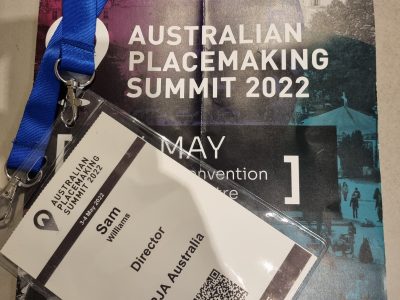
20 minute neighbourhoods, we are all placemakers and “Farnarklin” – All covered in Day 2 of the Australian Placemaking summit 2022.

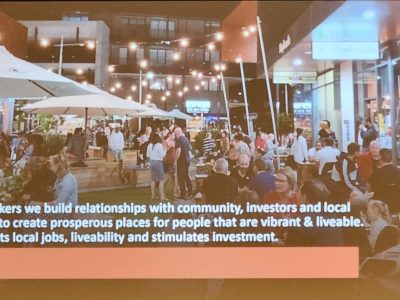
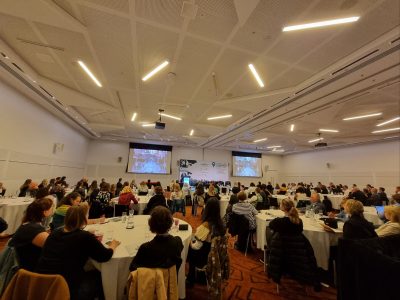
Following a very insightful first day from multiple industry leaders I was excited to attend Day 2 of the placemaking summit 2022. Day 1 helped establish the fundamentals of placemaking and how it has a significant impact on everyone’s lives. Day 2 expanded on this and even highlighted that if done well it can extend life expectancy!

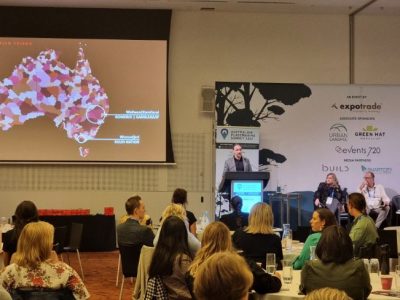
The day kicked off with a keynote from Lucinda Hartley (Neighbourlytics) exploring the world of big data to provide alternative ways to score places using hyper-local analytics for 20 minute neighbourhoods backed by global research and coverage. The case studies from cities around the world explored the interaction between social life, wellbeing of places and citizen-centric design.

This presentation was followed by Peter Smith (City of Port Phillip) on the opportunities and challenges of Fishermans Bend, a development close to my heart being in my local neighbourhood.

Fishermans Bend is Australia’s largest urban renewal project covering approximately 480 hectares in the heart of Melbourne. The development will create employment opportunities for up to 80,000 people and provide approximately 80,000 homes by 2050.

Peter highlighted the importance of the three critical success factors, software, hardware and orgware. The concept of ‘orgware’ was new to me but one that will not be forgotten, orgware helps to provide the framework of a development and resonated with me as it ensures the place has a soul. You can build the best buildings, install the best features but without the place having a soul it will struggle with the test of time.

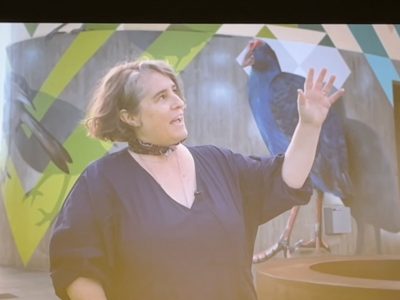
Frith Walker (Panuku Development) was unable to make the conference and pre-recorded a presentation, a masterclass of how to pre-record a presentation I must add! The passion Frith has for placemaking shone through into the room and had every attendee glued. Frith took us on a guided tour of a project across the ditch in Tāmaki Makaurau, a project that has been designed with a heart and encompasses one of the initial quotes:

“Hutia te rito o te harakeke
Kei whea to kōmako e kō?
Ki mai ki ahau
He aha te mea nui o te Ao?
Maku e kī atu,
he tāngata, he tāngata, he tāngata”

“If the heart of the harakeke was removed,
Where would the bellbird sing?
If I was asked what was the most important thing in the world
I would be compelled to reply,
It is people, it is people, it is people”

From an engineering perspective the development needed a pumping station, from a placemaking perspective the development embraced the requirement for a pumping station, seeing it as an opportunity to bring artwork into the community.

A panel discussion followed discussing placemaking and the property development, Sophie Pickett-Heaps (Stockland) stated they embrace placemaking and see it as a critical aspect in their role as developers. Afterall, they are not simply selling a product, they are first hand creating a community and lifestyle. Bec McHenry (To Good Use) provided a key take away comment; we should all call ourselves placemakers, not just Architects, Planners, Engineers etc.

This is a great way to break down the barriers and encourage collaboration, by each profession coming together with the one vision – to create a better place through great design. It just so happens this is the reason I joined PJA, to integrate all aspects of development!

Farnarkling?

I was then introduced to one of the most Australian words I have come across: ‘Farnarkling’ – The group activity whereby everyone sits around discussing the need to “do something” but nothing actually happens.

Bruce Mills (City of Parramatta) went on to explain how they have one of the largest local government place-making teams linking projects, initiatives and priorities across multiple business units.

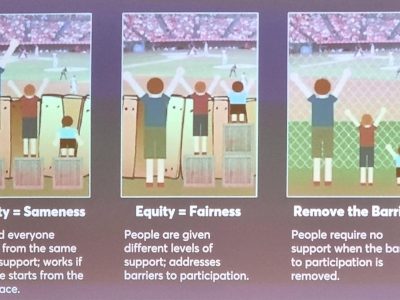
We have all seen the “Equality = Sameness and Equity = Fairness” image but the third “Remove the Barrier!” is rarely depicted, why can’t we just remove the barrier! Wouldn’t this create a world we can all celebrate? I believe the more conversations we have around inclusive design, collaborating between all professions and increased consultation with every stakeholder the outcomes can only ever be celebrated.

Are there other engineers at a placemaking summit you ask?

This time taking centre stage with a panel discussion: Placemaking and public lighting.

Highlighting the importance of lighting, not just on safety but the transition between space and creating places through light play. It was great to hear the passion from other engineering professionals to be included in initial designs and just how flexible lighting can be, not just fit for purpose but can be embraced. Why just design places for the day when dark occupies up to 50% of the time?

But…did I get questions answered?

So were my initial three questions answered on Placemaking?

• Is it implementing shared spaces and slowing vehicular traffic?
• Is it removing parking and encouraging active travel?
• Is it just another buzzword in the industry?

The answer is both yes and no to all three and that is ok.

Every presenter had a different definition of placemaking and that’s ok too, so long as we all have the ambition to create great places.

Afterall, we are all placemakers!


Got questions or fancy a conversation over a coffee? Get in contact as it would be great to keep the topic at the forefront of discussions.

For more information, please contact [email protected]

Find out more about us here


What is placemaking really? Which professions are involved? And why is a civil engineer here? I have been working in civil engineering for over a decade and in more recent years placemaking has moved to the forefront of design.

Through my engineering career I’ve worked on a wide variety of projects ranging from intersections and Water Sensitive Urban Design (WSUD) to commercial precincts and street upgrades, and placemaking was often seen as a topic no one could agree a fixed definition of. Is it implementing shared spaces and slowing vehicular traffic? Was it removing parking and encouraging active travel? Is it just another buzzword in the industry?

These are all questions answered during the Placemaking Summit 2022 in Melbourne.

Day 1 provided insights from industry leaders from around the world, topics including the economic benefits, human-centred planning, major projects and indigenous inclusions. Each presentation was built around placemaking but with a varying focus from economists, architects, landscape architects and transport consultants.

The overriding passion from every speaker and attendee that I met was to change the way in which we design places in order to focus on creating a sense of community and connection to the land – this was infectious.

Louise Ford from Hatch Roberts Day outlined the underlying benefits of adopting a place focused design from the outset which often realises stronger financial returns. Using the following seven elements to measure performance of a great place helps create a more fulfilling lifestyle:

  1. Equity
  2. Identity
  3. Greenery
  4. Urbanity
  5. Mobility
  6. Wellness
  7. Resilience


A panel discussion on Placemaking for Everyone explored the importance of engaging with indigenous culture and ways in which we can include the rich history from the longest civilization in the world. And how, if done right, can bring a true sense of belonging to the place. As a recent migrant to the Bunurong Boon Wurrung and Wurundjeri Woi Wurrung peoples of the Eastern Kulin Nation (The City of Melbourne) this topic was especially insightful and provided a number of research topic takeaways such as the International and Australian Indigenous Design Charter.

A number of talks explained the opportunities Covid-19 has presented us, a once in a lifetime event that has disrupted the industry. For example, pre-Covid removing a parking space was faced by heated public consultations, months of bureaucracy and scepticism. However, now retail venders are requesting parking to be replaced with parklets and approvals are taking less than 30 days!

Presentations covered how Covid has redirected focus and gained momentum in movement and place, that streets don’t have to be car centric thoroughfares but can be destinations in their own right. Where people can and want to sit, dwell and relax.

Daniel Bennett (Aurecon) and Will Fooks (Stantec) separately explored the importance of design thinking, data and real metrics to shape big projects and cities whilst recognising the dual function infrastructure can play. How seeing the opportunity to reduce road space, increase landscaping and lighting can provide pedestrian comfort are hard metrics to reimagine how we design the 80% of all open space in towns and cities.

The day concluded with a presentation most place makers in the room had been scratching their head about all day – Digital Placemaking: Our Future in the Metaverse by Emile Rademeyer from Vandal.

This prompted the questions:

  • What is the Metaverse?
  • What are NFTs?
  • Why did someone pay $1.36 million for a single grey pixel digital artwork?

But in all seriousness, if placemaking is looking to connect people to places and encourage people focused designs then surely this should also apply to the digital space.

Day 1 of the placemaking summit certainly provided insight into my initial questions, what would day 2 bring? To be continued…

Look out for the second part of our ‘Insights of a civil engineer in to placemaking’ article next week.

For more information, please contact [email protected]

Find out more about us here


Our wonderful team are our greatest asset. Not only experts in transport, engineering and placemaking but also committed to delivering better places for people through high-level-service client experiences.

We’re very proud to continue to celebrate the faces behind the fast-growing international consultancy that we are today in our monthly feature ‘PJA People’.

Next up in our series is Graduate Flood Risk & Drainage Engineer, Charlotte Turner, based in our Birmingham office in the UK:


Tell us what you do at PJA

Hi, my name is Charlotte and I am currently a Graduate Flood Risk and Drainage Engineer at PJA. My role involves analysing flood risk for a range of development sites across the country. I have recently got involved in a variety of projects which have involved the production of Flood Risk Assessments and Drainage Strategies.


What’s your career path so far?

I graduated from Coventry University in 2021 with a BSc Geography degree and applied to the graduate scheme at PJA. I am now looking to build on my skillset further and work towards chartership in the future through CIWEM.


What do you enjoy when you’re not working?

When I am not working, I enjoy attending football games at West Bromwich Albion with my family and friends. Photography is also a hobby of mine and I like to go on walks with my camera to take landscape and nature shots on the weekend.


Are you a dog or cat person?

I am a dog person 100% ! When I’m older I would love to have a Golden Retriever.


What are you currently reading or listening to?

I am currently reading Playing Nice by JP Delaney. I like thrillers and crime fiction which keep the reader hooked.


Claim to fame?

I have met Ex England Manager Roy Hodgson.


Charlotte Turner, Graduate Flood Risk & Drainage Engineer

Charlotte joined the PJA Graduate Development Programme in September 2021 and is based in our Birmingham office in the UK.

She graduated from Coventry University with a BSc (Hons) in Geography where she gained knowledge surrounding Flood Risk Management and experience in GIS and Hydraulic Modelling. Using this, Charlotte’s dissertation investigated the use of Natural Flood Management in a local catchment to see whether the use of natural structures could reduce peak flood depths and extents.

Get in touch with Charlotte: [email protected]


To find out more about our services here

Happy World Creativity and Innovation Week! Backed by the United Nations, the week raises awareness of the role of creativity and innovation play in making the world a better place, which is right up our street!

Since our chairman and founder Phil Jones was a member of the team that produced Manual for Streets in 2007 for the Department for Transport in the UK, a guide to the design of urban, residential and lightly trafficked streets, PJA has gained extensive experience of writing and assisting in national and international design guidance and publications and designing streets and public places.

And who better to explain more than Annabel Keegan, an Associate Director in our UK Birmingham office, who joined PJA in 2011 kickstarting the company’s placemaking division.

Tell us about your background and your beginnings at PJA?

After completing my undergraduate degree in architecture, I was offered at a job at Atkins in the transport planning team in 2001.

Despite my initial reservations about the change in career direction, I stayed there for nearly five years, completed their graduate training programme and developed a passion for streets and public realm design. During my time there I also studied for a masters degree in urban design which helped me to blend together my architectural background and my new skills in transport.

During this time Phil Jones was part of the team who produced Manual for Streets. This was the first time that the design of streets considered that the ‘place’ function of a street was not automatically considered to be subservient to the ‘movement’ function. This was an exciting time for the industry, as it really strengthened the connection between people and the environment they live in and use.

I was delighted to joined PJA in 2011, after the publication of Manual for Streets brought together the transport planning and urban design aspects in designing residential streets. I set up a new urban design team– which is now known as ‘placemaking’. There were just 10 people at PJA when I started and now there’s more than 100 across the company.

So how does good placemaking improve our quality of life?

Streets and roads make up around three-quarters of all public space – so their design, appearance, and the way they function have a huge impact on the quality of people’s lives and the appearance of our built environment. This gives us place makers a huge opportunity to make a positive impact on the quality of the places we design.

Well-designed, high quality public space also contributes to people’s health, happiness and well-being. It influences the way we choose to travel and can encourage us to use more sustainable and healthy modes of transport including walking, cycling and public transport.

Creating well-designed places is also fundamental to achieving spaces that are socially, economically and environmentally sustainable. We repeatedly see places failing, often where there is a poor relationship between buildings and the street.

Tell us more about PJA’s creativity and innovation

PJA has gone from strength to strength since the first Manual for Streets was published in 2007. We have continued to move things forward and have been involved in a number of recent policy and guidance documents.

Most recently Phil and Associate Director Adrian Lord helped produce LTN 1/20. This accompanied the UK Government’s Gear Change policy in March 2020 to boost cycling and walking and tackle health and environmental challenges. Thousands of miles of higher standard, protected cycle routes in towns and cities are set to be built, monitored by the new inspectorate Active Travel England.

We also have an engineering division at PJA too, so we can deliver plans from concept design right though to delivery.

We have always been leaders in the field and try to practice what we preach. Clients come to us because we are innovators, and we have the appetite to work on great projects. Our local teams mean that we can offer a dedicated, tailored approach.

Tell us about a project you are working on

I mainly work on street and public realm focussed projects for a range of public sector and private sector clients. I am currently working on an exciting project transforming three key streets in Stratford-upon-Avon town centre in the UK. We’re redesigning Bridge Street, High Street and Union Street to create a better balance of pedestrians, cyclists and vehicles.

Our vision is to create a town centre which is full of life and meets the needs of the local community, businesses and visitors. The designs mean that there will be less traffic in the centre, making it safer and more inviting for pedestrians and cyclists. More people will be attracted to the town centre and will spend longer and more money in the local economy.

I have also recently been appointed by the Northumberland Coast AONB Partnership to prepare a new design guide focussing on the public realm around roads and highways. The Northumberland Coast in north east UK is designated as an Area of Outstanding Natural Beauty covering an area just over 50 square miles. My role is to prepare a new document which will provide advice on the design, maintenance and management of roads and public realm in the area to ensure the highest standards of design in this valuable landscape.

Get in touch with Annabel: [email protected]


Annabel Keegan, Associate Director

Annabel is an Associate Director at PJA and leads our placemaking team based in our Birmingham office in the UK.

She is a qualified urban designer and transport planner with a background in architecture and has over 15 years’ practical experience in large multidisciplinary consultant teams, specialising in the delivery of design-led projects both within the public and private sector.


Find out more about our services here

A career with PJA offers the opportunity to work on a wide range of projects, within a responsive and dynamic environment, and with excellent career progression prospects.

We are currently seeking leading engineers or transport planners with good commercial experience to join PJA in our Perth office. Working with our national team of Directors we are looking for candidates to turn the vision of PJA into a strategy for growing our offering in Western Australia.

If you think this might be you, find out more details and how to apply here

We are looking forward to hearing from you!