What is placemaking really? Which professions are involved? And why is a civil engineer here? I have been working in civil engineering for over a decade and in more recent years placemaking has moved to the forefront of design.
Through my engineering career I’ve worked on a wide variety of projects ranging from intersections and Water Sensitive Urban Design (WSUD) to commercial precincts and street upgrades, and placemaking was often seen as a topic no one could agree a fixed definition of. Is it implementing shared spaces and slowing vehicular traffic? Was it removing parking and encouraging active travel? Is it just another buzzword in the industry?
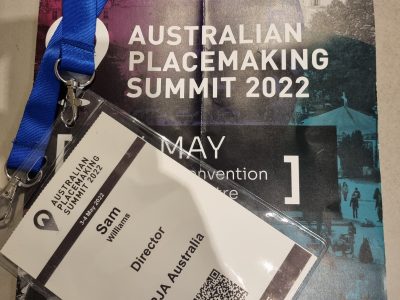
These are all questions answered during the Placemaking Summit 2022 in Melbourne.
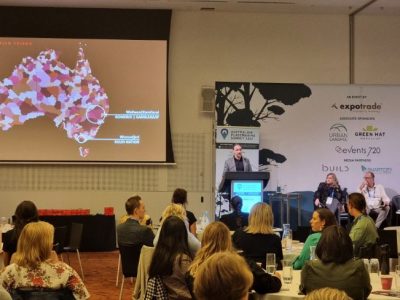
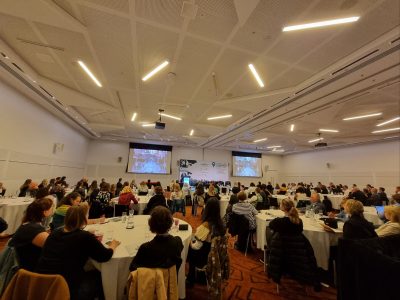
Day 1 provided insights from industry leaders from around the world, topics including the economic benefits, human-centred planning, major projects and indigenous inclusions. Each presentation was built around placemaking but with a varying focus from economists, architects, landscape architects and transport consultants.
The overriding passion from every speaker and attendee that I met was to change the way in which we design places in order to focus on creating a sense of community and connection to the land – this was infectious.
Louise Ford from Hatch Roberts Day outlined the underlying benefits of adopting a place focused design from the outset which often realises stronger financial returns. Using the following seven elements to measure performance of a great place helps create a more fulfilling lifestyle:
- Equity
- Identity
- Greenery
- Urbanity
- Mobility
- Wellness
- Resilience
A panel discussion on Placemaking for Everyone explored the importance of engaging with indigenous culture and ways in which we can include the rich history from the longest civilization in the world. And how, if done right, can bring a true sense of belonging to the place. As a recent migrant to the Bunurong Boon Wurrung and Wurundjeri Woi Wurrung peoples of the Eastern Kulin Nation (The City of Melbourne) this topic was especially insightful and provided a number of research topic takeaways such as the International and Australian Indigenous Design Charter.
A number of talks explained the opportunities Covid-19 has presented us, a once in a lifetime event that has disrupted the industry. For example, pre-Covid removing a parking space was faced by heated public consultations, months of bureaucracy and scepticism. However, now retail venders are requesting parking to be replaced with parklets and approvals are taking less than 30 days!
Presentations covered how Covid has redirected focus and gained momentum in movement and place, that streets don’t have to be car centric thoroughfares but can be destinations in their own right. Where people can and want to sit, dwell and relax.
Daniel Bennett (Aurecon) and Will Fooks (Stantec) separately explored the importance of design thinking, data and real metrics to shape big projects and cities whilst recognising the dual function infrastructure can play. How seeing the opportunity to reduce road space, increase landscaping and lighting can provide pedestrian comfort are hard metrics to reimagine how we design the 80% of all open space in towns and cities.
The day concluded with a presentation most place makers in the room had been scratching their head about all day – Digital Placemaking: Our Future in the Metaverse by Emile Rademeyer from Vandal.
This prompted the questions:
- What is the Metaverse?
- What are NFTs?
- Why did someone pay $1.36 million for a single grey pixel digital artwork?
But in all seriousness, if placemaking is looking to connect people to places and encourage people focused designs then surely this should also apply to the digital space.
Day 1 of the placemaking summit certainly provided insight into my initial questions, what would day 2 bring? To be continued…
Look out for the second part of our ‘Insights of a civil engineer in to placemaking’ article next week.
For more information, please contact [email protected]
Find out more about us here